Choosing the Right Welded Diamond Blade for High-Intensity Cutting: Welding Process and High-Manganese Steel Core Explained
2026/02/20
Technical knowledge
For high-intensity cutting, selecting the right diamond blade is less about brand guesswork and more about matching blade technology to material, thickness, and feed rate. This article breaks down why welded diamond segments combined with a high-manganese steel core have become a go-to solution for demanding stone and metal applications—delivering higher wear resistance, steadier cutting force, and better control of dust compared with traditional resin-bond blades. Drawing from field-proven engineering practices, it provides a practical selection framework based on workpiece type, cutting depth, coolant condition, and machine power, and highlights typical performance gains such as longer service life and reduced downtime when the right configuration is used. The piece also suggests useful visuals (e.g., segment/teeth geometry comparison charts) and includes an engineer quote box to support decision-making. For teams aiming to improve utilization, consistency, and shop-floor cleanliness, UHD’s high-performance cutting blades are presented as a natural next step for evaluation.

Choosing the Right Diamond Blade for High-Intensity Cutting: Why Welding + High-Manganese Steel Matters
In high-load cutting—think thick stone, reinforced concrete, hard metal stock, or continuous production lines—blade selection is no longer a “fit-and-forget” purchase. The wrong blade can turn into a hidden cost center: overheated motors, unstable feed, excessive dust, and frequent changeovers that eat into uptime. This article breaks down welded diamond blade technology and high-manganese steel cores, compares them to resin-bond blades, and offers a practical selection logic engineers use on real job sites.
1) The Technical Core: Why Welding + a High-Manganese Steel Core Raises Performance
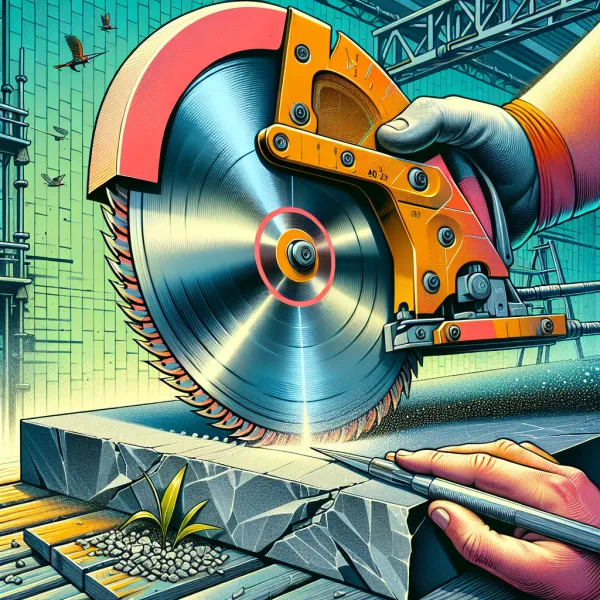
A diamond blade is a system, not a single part. Performance depends on how the diamond segment is fixed to the core, and how the core behaves under heat, vibration, and torsional load. In heavy-duty cutting, two technologies consistently appear in high-performing blades: welded segments and high-manganese steel (Mn steel) blade bodies.
Welded segments: stronger retention under shock and heat
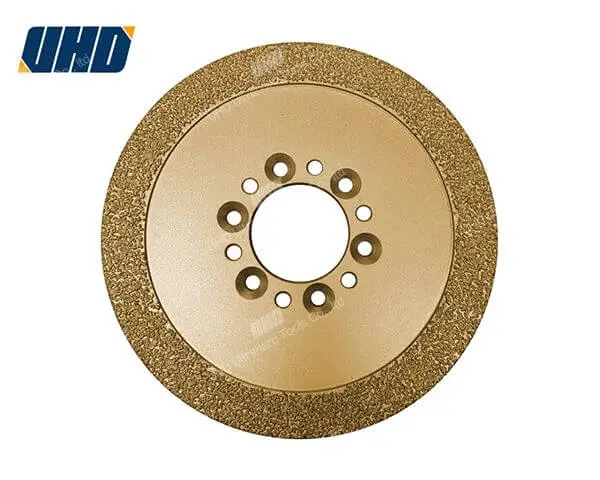
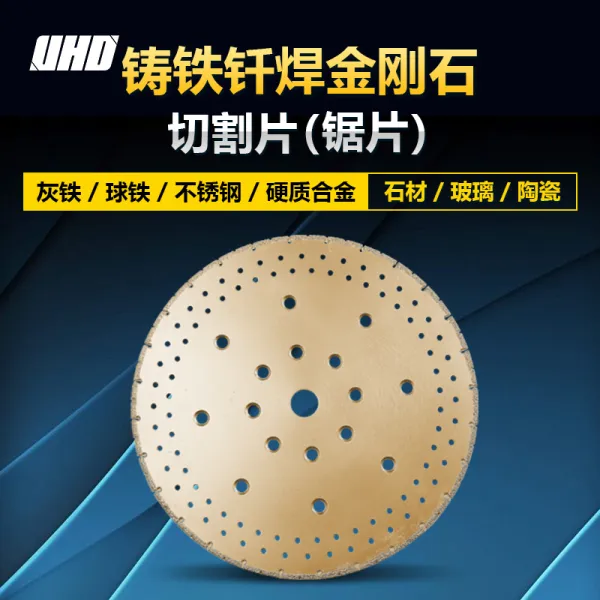
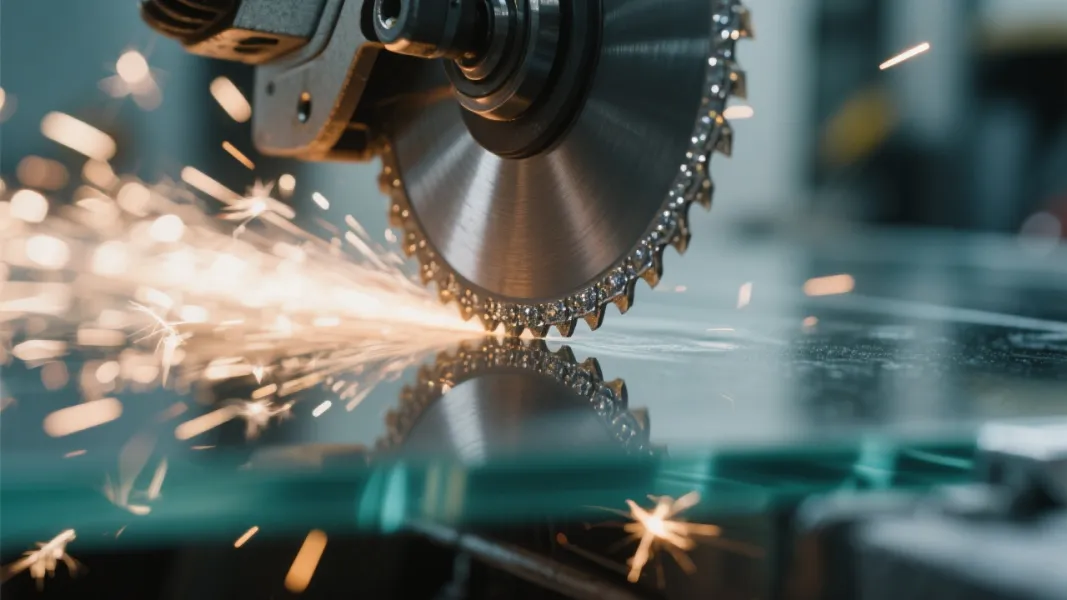
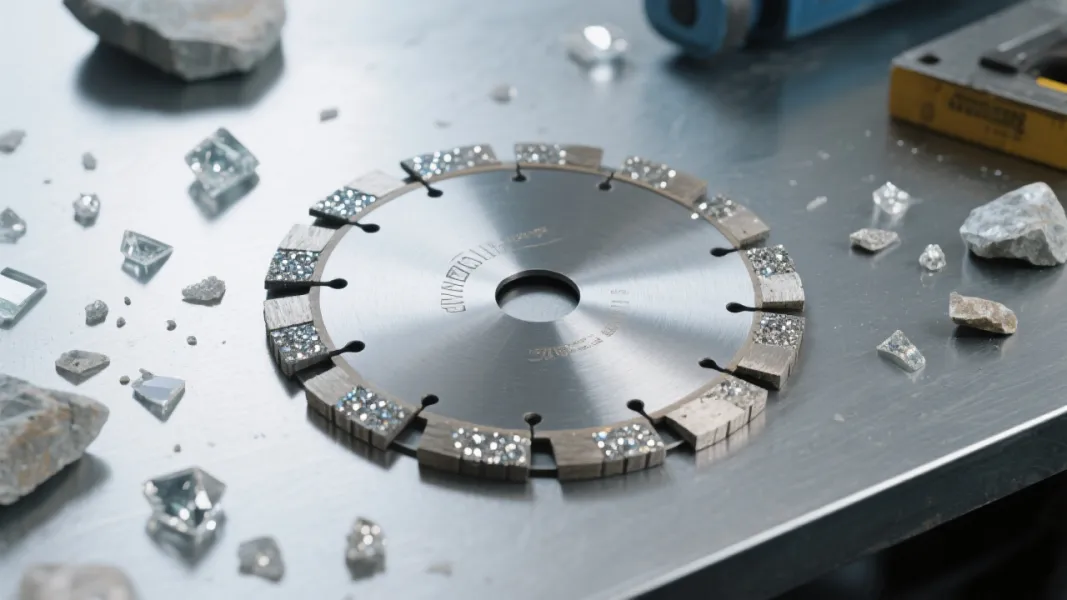
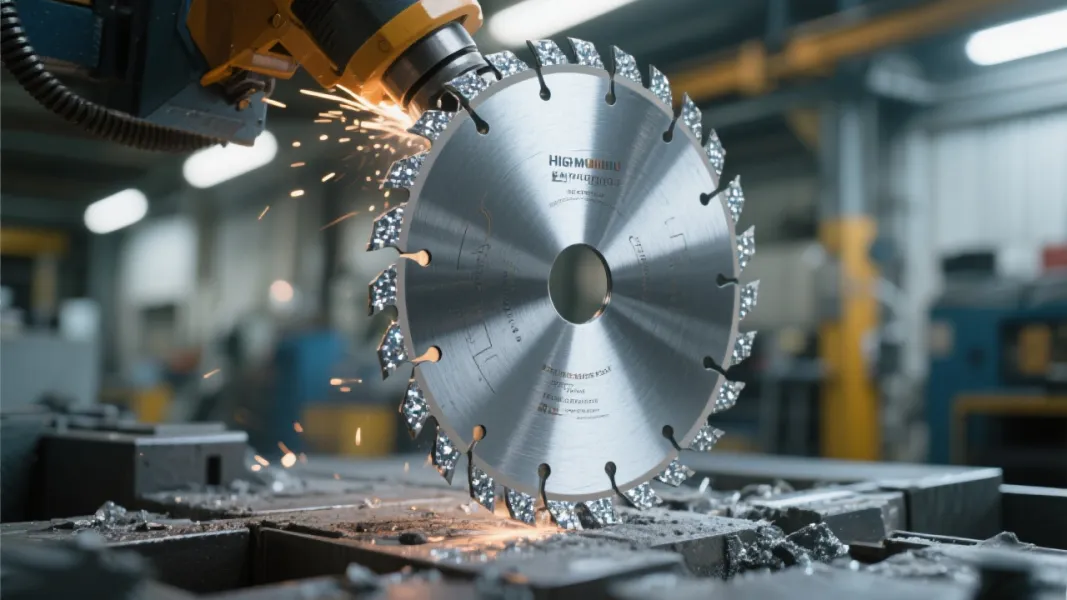
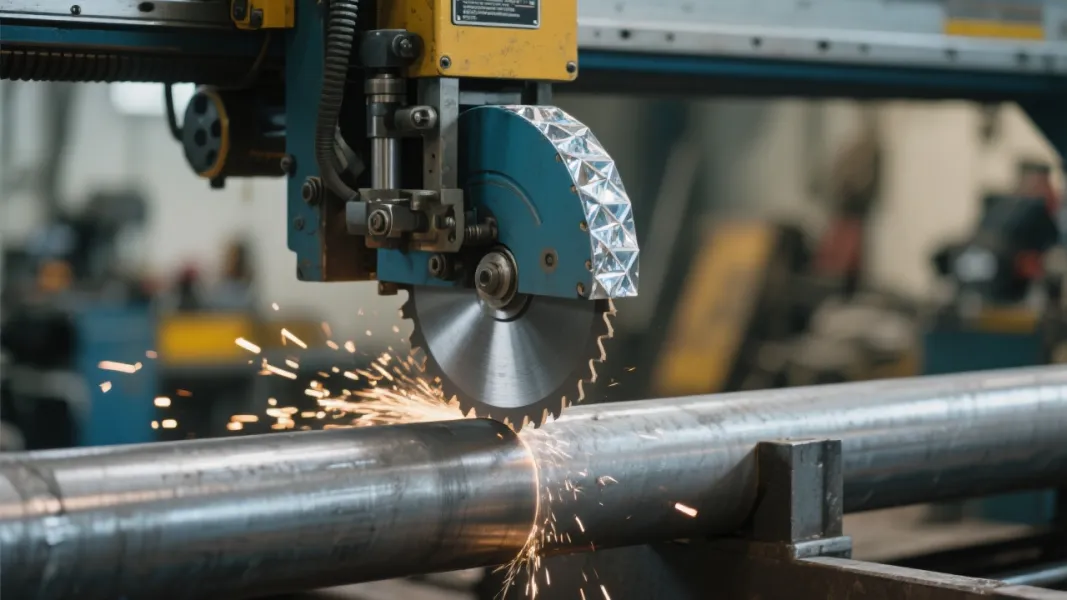
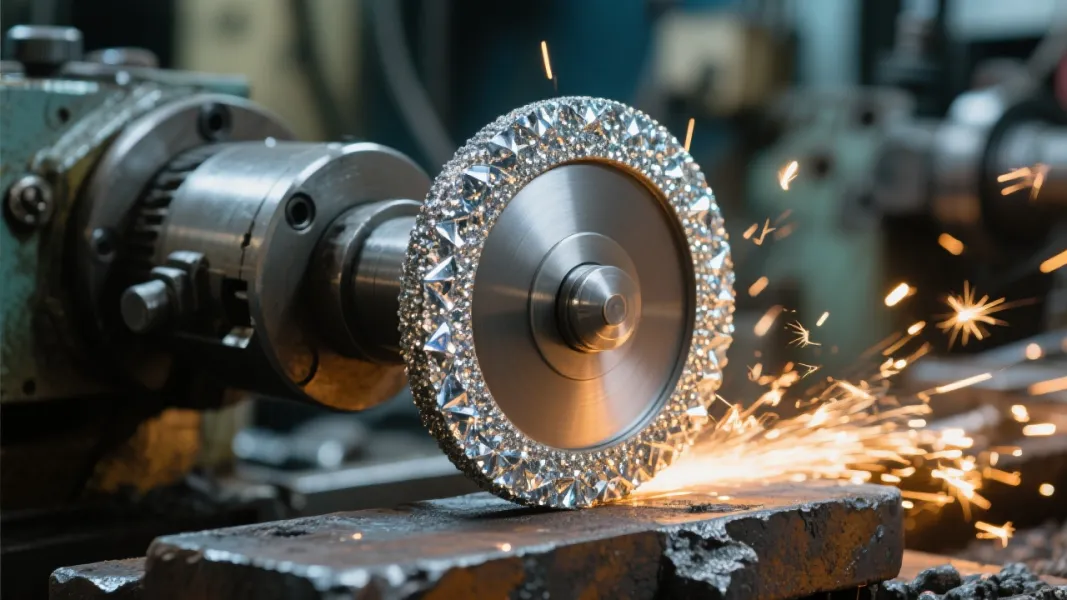
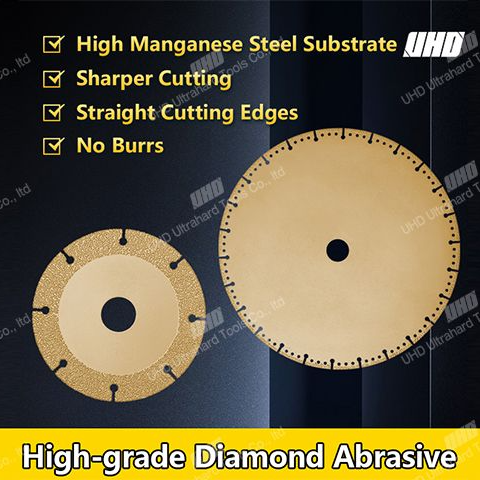
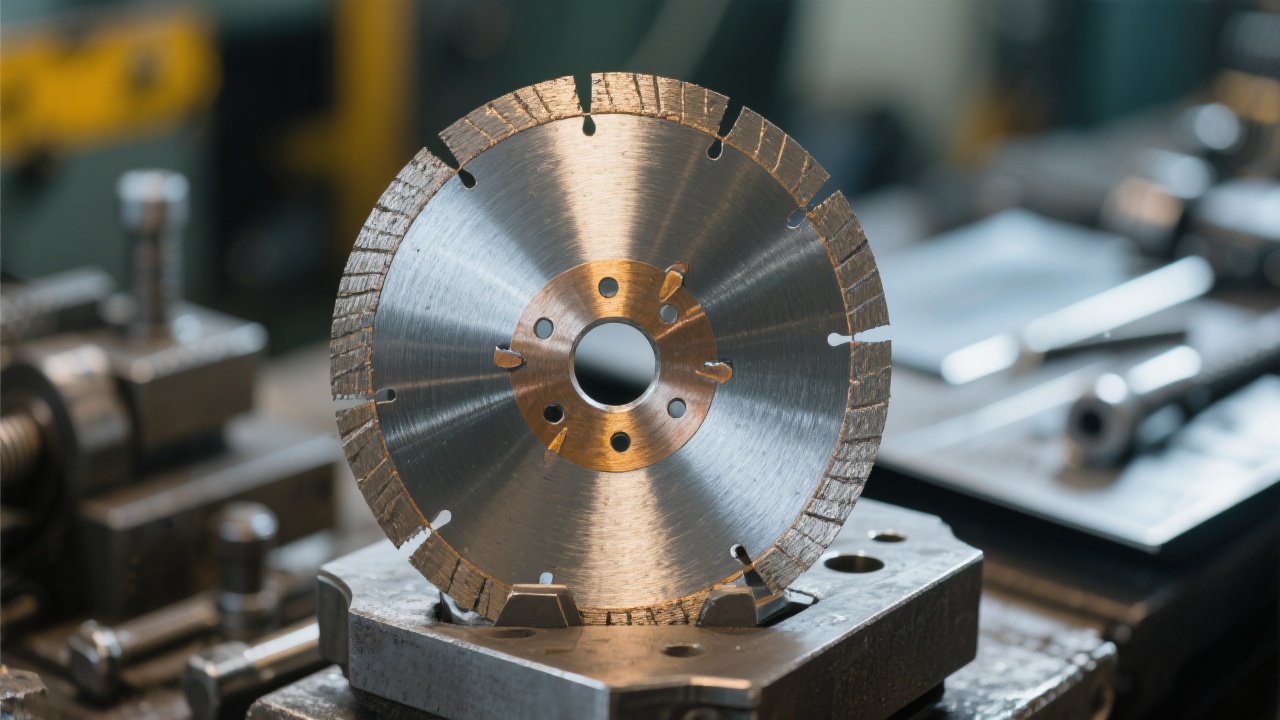
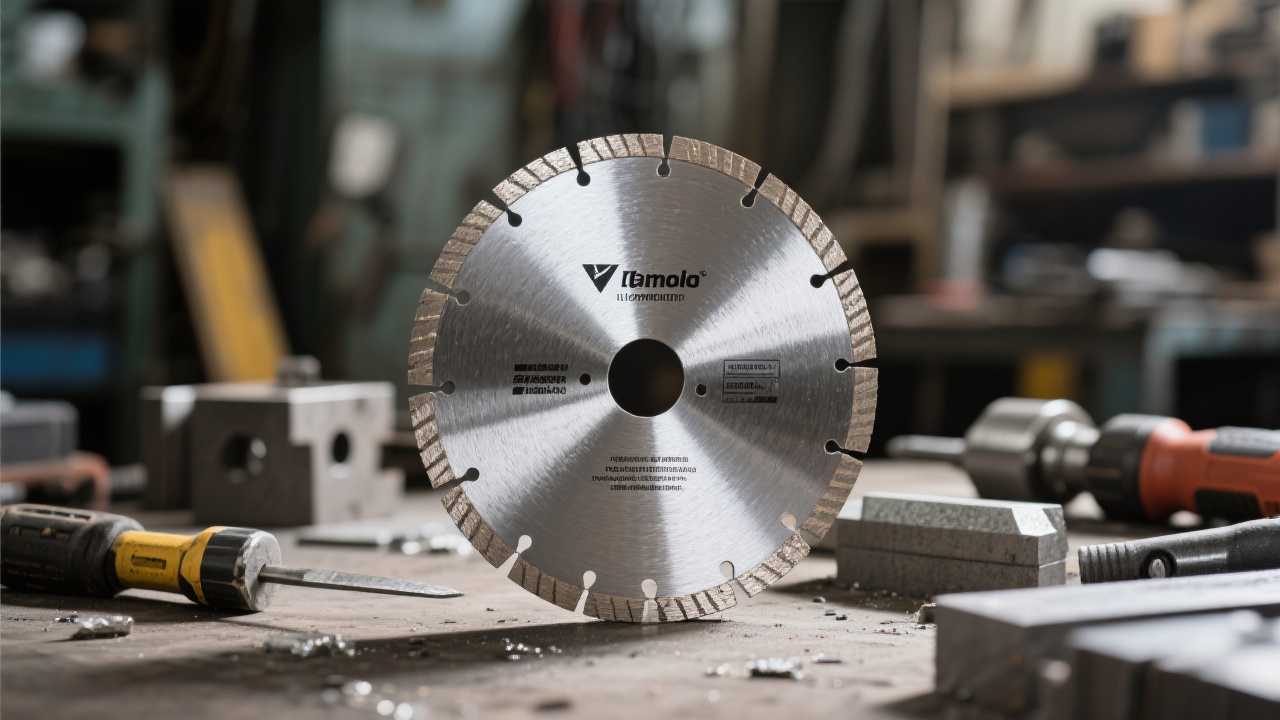
Compared with resin-bond cutting discs, welded diamond blades (commonly laser welded or high-strength brazed depending on design and application) are built to keep segments stable when the cut becomes “unfriendly”: interruptions, rebar hits, dense aggregates, or metal inclusions. In practical shop-floor terms, welded retention reduces two costly failure modes—segment drop and rapid edge glazing.
High-manganese steel core: stability, fatigue resistance, and heat management
A high-manganese steel core is valued for its toughness and ability to handle repeated stress cycles. Under continuous cutting, the core must resist micro-cracking, maintain flatness, and damp vibration. In field comparisons, switching from standard carbon steel cores to high-Mn cores often brings:
- Better resistance to heat-induced warping during long runs
- More stable tracking in the kerf (less lateral “wander”)
- Lower vibration—supporting cleaner edges and less operator fatigue
“If the core can’t stay stable at temperature, you’ll keep ‘tuning’ the process—slower feed, lighter pressure, more blade changes. A tougher core gives you the freedom to run the machine the way it was designed.”
—Site engineer’s note from continuous cutting of dense stone and mixed material
2) Real-World Comparison: Resin Blades vs Welded Diamond Blades
Resin-bond discs have their place—light to moderate tasks, fast swaps, and certain finishing operations. But high-intensity cutting demands consistent segment exposure and thermal stability. Below is a practical comparison based on typical industrial conditions (continuous cuts, hard materials, and limited downtime tolerance).
| Metric |
Resin-Bond Disc |
Welded Diamond Blade + High-Mn Core |
Typical Outcome in Heavy Duty |
| Service life (continuous, hard material) |
Baseline |
+120% to +300% longer (common range) |
Fewer changeovers; more stable throughput |
| Cutting efficiency (material removal rate) |
Drops as disc heats/glazes |
More consistent segment exposure |
15%–35% faster cycle time is often achievable |
| Risk under shock (rebar hits, interrupted cuts) |
Higher wear / edge damage |
Stronger segment fixation and core toughness |
Lower failure rate; reduced unplanned stops |
| Dust & heat behavior |
More friction when dulled |
Cleaner cutting when matched to material |
Often 10%–25% less dust with proper extraction/wet cutting |
| Total cost of operation |
Lower unit cost, higher consumption |
Higher performance, fewer replacements |
Typically 8%–22% lower cost per cut in production settings |
The core takeaway: under heavy load, it’s rarely the purchase price that hurts—it’s the downtime. Every blade change is not just a consumable swap; it’s a process interruption, a quality risk, and often a parameter reset.
3) Engineer’s Selection Logic: Match Material, Thickness, and Parameters
Engineers don’t choose blades by “harder is better.” They choose by controlling the relationship between material abrasiveness, hardness, cut length, and machine power. A blade that is too “hard” (bond too strong) can glaze and burn. A blade that is too “soft” can wear too quickly. The goal is stable self-sharpening.
Step 1: Identify what actually destroys the blade
- Highly abrasive (sandstone, green concrete, some refractories): tends to wear segments fast → choose a bond that resists wear and maintains edge.
- Hard and dense (granite, porcelain, hardened surfaces): tends to glaze segments → choose a formulation that exposes fresh diamonds efficiently.
- Mixed materials (reinforced concrete, stone with metal inserts): demands strong segment retention and a tough core → welded + high-Mn core becomes a safer baseline.
Step 2: Use thickness and cut depth to set expectations
Thickness changes the heat profile. When thickness doubles, the heat doesn’t just double—it can accumulate exponentially if chip evacuation is poor. For deep cuts, blades that run cooler and track straighter reduce kerf friction and motor strain.
Quick Selection Checklist (practical, not theoretical)
If you see…
- Burn marks / blueing
- Polished, shiny segment surface
- Cut speed drops after a few minutes
Do this…
- Select a blade designed for dense/hard material (better self-sharpening)
- Reduce feed slightly, increase cooling (wet or effective dust extraction)
- Verify RPM matches blade rating; avoid overspeed
Step 3: Align blade design with feed rate and RPM
In high-intensity cutting, “operator feel” is not a reliable control method. Consistent results come from matching segment design to the machine’s power curve and the planned feed rate. If you must run aggressive feed, choose a design with stronger segment retention and a core that resists heat distortion.
Info-Graphic Suggestion (for your page designer)
A single visual can reduce pre-sale questions. Consider adding an infographic titled: “Segment Geometry vs Cutting Behavior”
- Turbo rim vs segmented rim: noise, chip evacuation, edge quality
- Segment height and gullet depth: heat, debris clearance, stability
- Core material comparison: standard steel vs high-manganese steel under thermal load
4) Manufacturing Pain Points: Lower Maintenance Cost, Higher Machine Utilization
Production managers usually don’t complain about blades—they complain about what blades do to the line. When blade selection is wrong, secondary costs appear fast:
- Unplanned downtime from frequent changes or safety stops
- Quality defects (chipping, edge burn, inconsistent kerf)
- Hidden equipment stress (motor overload, spindle wear, bearing heat)
- Dust management burden when friction increases and particles rise
In many facilities, moving from general-purpose resin discs to application-matched welded diamond blades produces a measurable shift in utilization. As a conservative reference from mixed industrial scenarios: machine uptime often improves by 5%–12% simply because changeovers and rework decrease.
5) Application Examples with Reference Numbers (What “Better” Looks Like)
Below are realistic reference improvements reported in typical use cases where welded diamond blades and tougher cores are chosen specifically for high-intensity work. Actual results depend on operator technique, cooling method, machine rigidity, and material batch variation.
Dense stone cutting (continuous runs)
Switching from general-purpose discs to welded diamond blades typically delivers +150% to +250% life extension and +15% to +30% faster stable cutting once the correct segment formulation is matched.
Practical benefit: fewer blade swaps per shift and more consistent edge quality.
Reinforced concrete / mixed material
With strong segment retention and a tougher core, breakage incidents can drop by 20%–40%, while overall cost per cut can improve by 10%–18% due to fewer interruptions.
Practical benefit: lower risk during rebar hits and interrupted cuts.
A simple procurement rule that prevents costly mistakes
If your cutting task is continuous, thick, dense, or mixed-material, prioritize blades engineered for stability—welded segments and a high-manganese steel core—then fine-tune segment design to your material and machine RPM. This approach typically reduces trial-and-error purchasing and shortens the time to a stable process window.
Ready to Upgrade Your Cutting Stability (Without Guesswork)?
If you’re specifying blades for high-intensity cutting lines, the fastest path is to start with a performance architecture that’s proven under thermal and shock load—then match the segment profile to your workpiece and feed strategy.
Explore UHD high-performance welded diamond cutting blades with high-manganese steel cores built for demanding stone and metal processing scenarios.
Tip for technical inquiries: share your material type, thickness, machine model/RPM, dry vs wet cutting, and target feed rate for faster blade matching.



.png?x-oss-process=image/resize,h_600,m_lfit/format,webp)