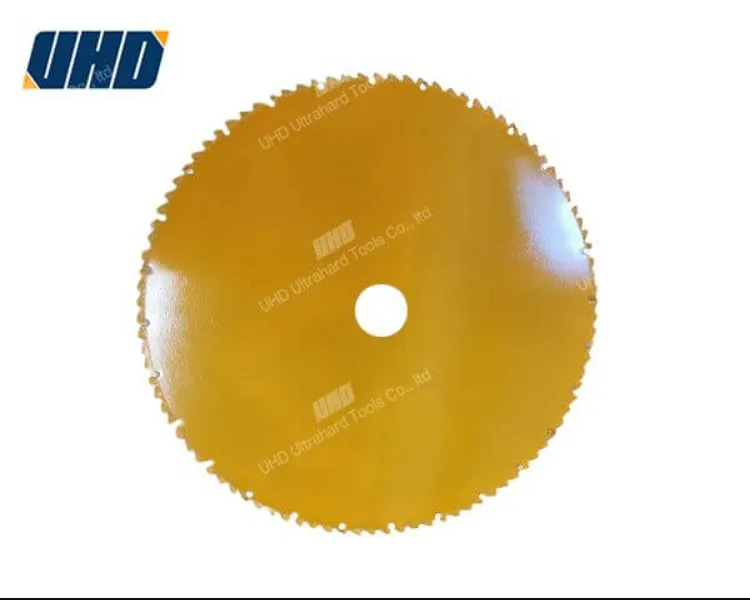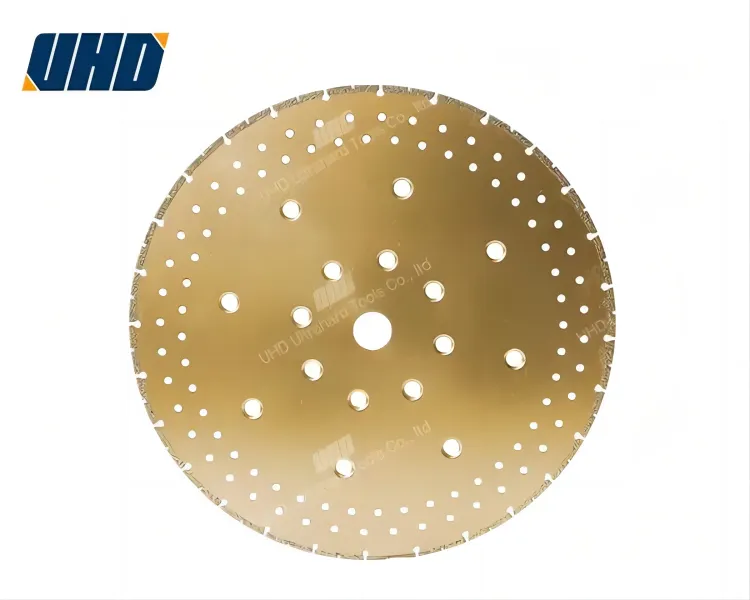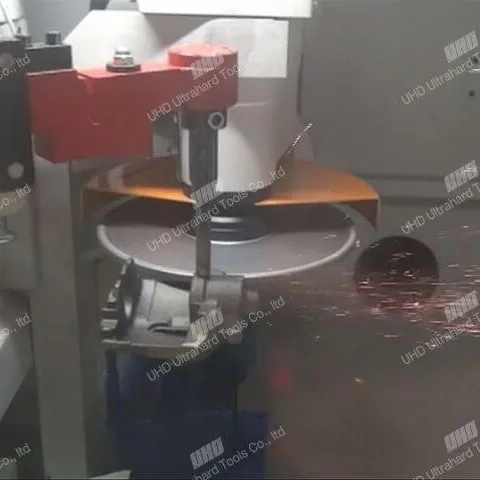
In the construction and stone processing industries, the performance of saw blades significantly impacts worker efficiency and equipment longevity. Excessive vibration and noise from saw blades not only reduce worker productivity but also accelerate equipment wear and tear. This article delves into the research on the performance of 400mm brazed diamond saw blades under different parameters, aiming to provide effective solutions for vibration control and noise reduction.
First, let's understand the impact of saw blade vibration and noise on construction. A construction worker once said, "When the saw blade vibrates strongly and makes a lot of noise, it's really hard to focus on the work. I feel exhausted after a short time, and the equipment also seems to break down more often." This feedback reflects the real - world problems faced by workers. In fact, studies have shown that high - vibration saw blades can reduce worker efficiency by up to 30% and increase equipment maintenance costs by 20%.
The performance of a 400mm saw blade is closely related to its structure. The arrangement of the segments on the saw blade is like the keys on a piano. A well - arranged "piano" can play a harmonious and smooth "melody" during cutting. By optimizing the segment arrangement density, angle distribution, and the rigidity of the base, the saw blade can better adapt to different cutting tasks.
For example, increasing the segment arrangement density can improve the cutting efficiency, but it may also increase the vibration if not properly designed. The angle of the segments affects the cutting force and the chip removal ability. A reasonable angle can reduce the cutting resistance and vibration. Additionally, a base with appropriate rigidity can provide stable support for the segments, ensuring the overall stability of the saw blade.
Brazing technology is another key factor in improving saw blade performance. It needs to balance the bonding strength between the segments and the base and the release of thermal stress. If the bonding strength is too low, the segments may fall off during cutting, which is extremely dangerous. On the other hand, if the thermal stress is not properly released, it will cause internal stress in the saw blade, leading to increased vibration and noise.
A skilled brazing process can ensure that the segments are firmly attached to the base while minimizing the impact of thermal stress. This reduces the running disturbance of the saw blade and improves its stability during operation. As a brazing technician put it, "A good brazing process is like a magic hand that makes the saw blade run smoothly."
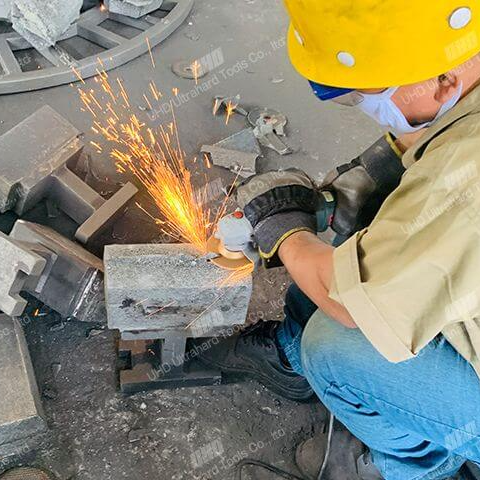
The performance of a 400mm saw blade also depends on the parameter settings in different working conditions. In a stone factory, where precision cutting is required, the rotational speed and feed rate need to be precisely controlled. For example, a rotational speed of 3000 - 3500 RPM and a feed rate of 5 - 10 mm/min are often used for fine - cutting tasks. In contrast, in a construction site with more rough - cut operations, the parameters can be adjusted accordingly. A higher rotational speed and feed rate can be used, but it also requires a more stable saw blade structure to ensure cutting quality.
Do you also encounter difficulties in setting parameters for different working conditions? Understanding the relationship between parameters and saw blade performance is crucial for improving cutting efficiency and quality.
Front - line workers have rich practical experience. They can quickly identify abnormal vibration signals of the saw blade. One worker shared, "When the saw blade vibrates abnormally, there will be a strange noise, and the cutting surface will become rough. At this time, we need to check the stability of the fixture immediately." They also provided some tips on adjusting the fixture stability, such as tightening the bolts regularly and checking the alignment of the fixture.

In conclusion, through the optimization of the saw blade structure, brazing technology, and parameter settings, as well as the application of practical skills from front - line workers, we can effectively control the vibration and noise of 400mm saw blades, improve worker efficiency, and extend equipment life. If you want to learn more about saw blade vibration control and performance optimization, click here to enter our technical column and explore more details.