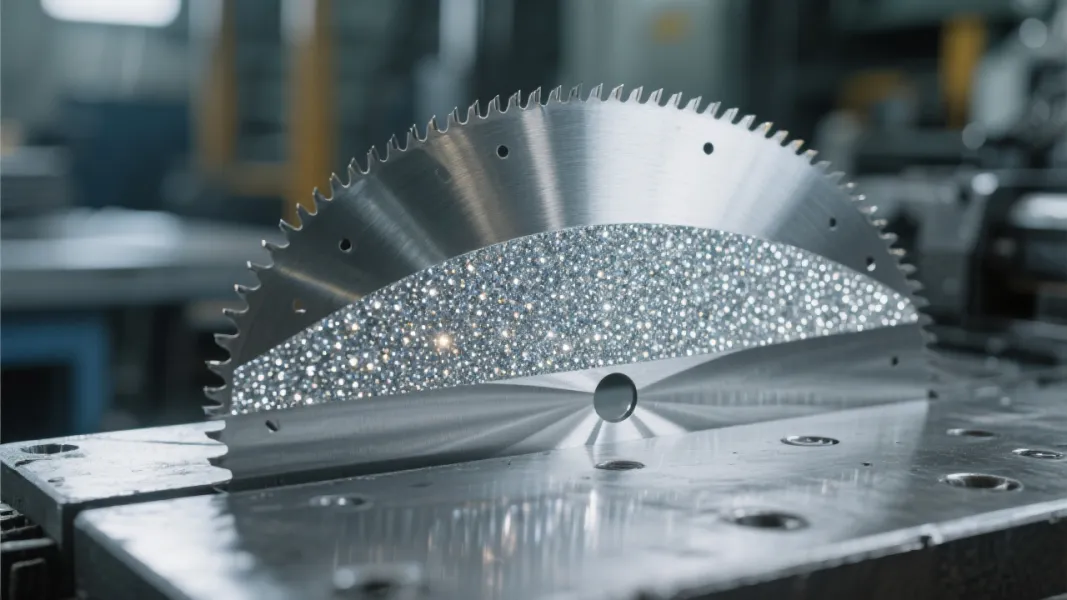
The manufacturing of high-performance diamond cutting tools demands precision and reliability, where the joining process plays a pivotal role in overall tool durability. Vacuum brazing technology stands out as an advanced solution, surpassing traditional welding methods by delivering superior bond strength, minimizing thermal stresses, and extending tool life. This article offers a comprehensive examination of vacuum brazing principles, key process parameters, defect diagnostics, and best practices, enabling technical professionals to maximize the operational efficiency and lifespan of diamond tools.
Traditional welding introduces high thermal input in an ambient atmosphere, which often causes thermal deformation and material degradation of the delicate diamond segments. In contrast, vacuum brazing occurs in a controlled low-pressure environment, enabling precise regulation of heat and preventing oxidation. This controlled process reduces thermal stresses, enhances metallurgical bonding, and results in more consistent and durable joints.
Maintaining optimal temperature profiles is fundamental to achieving strong, void-free joints. For diamond tools, typical brazing temperatures range between 790°C to 860°C depending on the filler alloy composition. Precise thermal ramp-up and cooldown rates prevent excessive thermal gradients that may induce micro-cracking or residual stresses.
Selection of the filler alloy is equally decisive. Silver-based or nickel-based brazing alloys with appropriate melting points and wettability characteristics are commonly employed to ensure metallurgical compatibility with both diamond segments and tool substrates. The filler must provide excellent diffusion bonding without compromising the diamond integrity.
Despite rigorous controls, several defects may arise during vacuum brazing, detrimentally impacting tool performance:
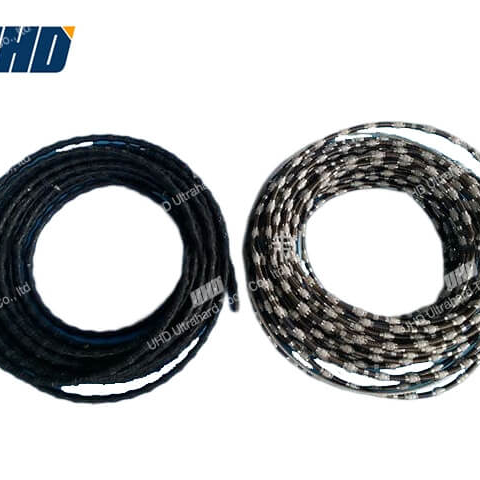
In industrial scenarios such as high-precision milling and thick plate stone cutting, diamond tools brazed via vacuum technology demonstrate substantially increased blade life and cutting stability. Field studies report a 40-60% reduction in downtime due to tool failure, while maintaining dimensional accuracy within ±0.02 mm, critical for premium finishes.
The robust adhesion created through vacuum brazing safeguards the diamond segments from premature detachment and degradation caused by intensive mechanical forces and thermal cycling inherent to these applications.
Routine inspection of brazed diamond tools is essential to preempt unexpected failure. Advanced non-destructive evaluation (NDE) methods such as ultrasonic testing and X-ray radiography effectively identify subsurface defects like porosity and cracks without damaging the tool.
Furthermore, maintaining tools under recommended operational parameters, avoiding abrupt thermal shocks, and conducting regular surface cleaning extend tool lifespans. Operators should also monitor for early signs of debonding or blade wear and replace tools before critical degradation.

“Vacuum brazing elevates diamond tool manufacturing by providing uniform, resilient bonds that withstand extreme machining conditions. It is a technology that shapes the future of durable cutting solutions.” – Dr. Michael Lang, Materials Science Specialist

 30
|
30
|
 low dust cutting blades
environmentally friendly cutting solutions
diamond saw blade technology
low dust cutting process
industrial environmental equipment
233
|
brazed diamond saw blades
stainless steel cutting tools
diamond particle size distribution
resin bonded vs brazed diamond segments
cutting parameter optimization
low dust cutting blades
environmentally friendly cutting solutions
diamond saw blade technology
low dust cutting process
industrial environmental equipment
233
|
brazed diamond saw blades
stainless steel cutting tools
diamond particle size distribution
resin bonded vs brazed diamond segments
cutting parameter optimization
 388
|
high-performance diamond cutting blade
UHD diamond blade
metal cutting efficiency
stone cutting blade
extended blade life
388
|
high-performance diamond cutting blade
UHD diamond blade
metal cutting efficiency
stone cutting blade
extended blade life
 489
|
dry wet saw blade performance
400mm diamond blade applications
brazed diamond blade durability
stone cutting tools for professionals
construction saw blade selection
489
|
dry wet saw blade performance
400mm diamond blade applications
brazed diamond blade durability
stone cutting tools for professionals
construction saw blade selection
 103
|
brazed diamond blade
400mm diamond saw blade
reduce cutting vibration
identify abnormal vibration in cutting
fixture stability adjustment
103
|
brazed diamond blade
400mm diamond saw blade
reduce cutting vibration
identify abnormal vibration in cutting
fixture stability adjustment







.png?x-oss-process=image/resize,h_600,m_lfit/format,webp)