In the industrial cutting field, different workpiece materials such as stainless steel and ductile iron pose unique challenges to cutting tools. Stainless steel, known for its high toughness and corrosion - resistance, requires cutting tools with excellent wear - resistance and heat - dissipation capabilities. Ductile iron, on the other hand, has a relatively high hardness and brittleness, demanding tools that can withstand high - impact forces during cutting.
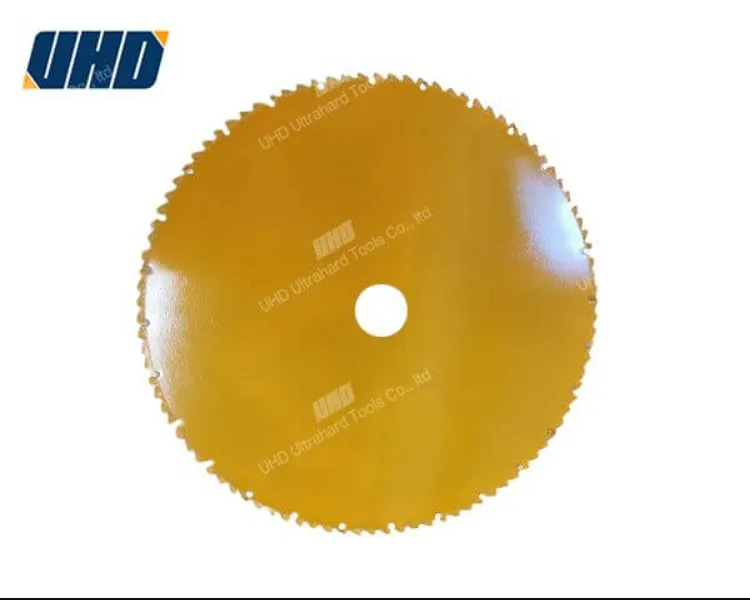
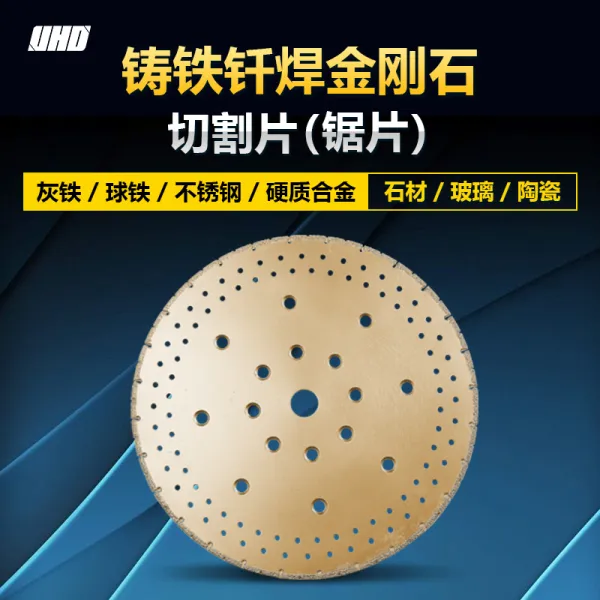
The ZS400H brazed diamond saw blade stands out as an ideal choice. Its unique diamond - brazing technology ensures a firm bond between the diamond and the substrate, providing superior cutting performance on these difficult - to - machine materials. For instance, compared with traditional saw blades, the ZS400H can reduce the cutting force by approximately 20% when cutting stainless steel, greatly improving the cutting efficiency.
Cutting parameters, mainly including linear speed and feed rate, have a significant impact on cutting quality and tool life. When the linear speed is too high, the saw blade may experience excessive wear and heat generation, reducing its service life. Conversely, a too - low linear speed will lead to inefficient cutting.
For the ZS400H saw blade, when cutting stainless steel, the recommended linear speed is around 60 - 80 m/min, and the feed rate is about 0.1 - 0.2 mm/r. When cutting ductile iron, the linear speed can be slightly increased to 70 - 90 m/min, and the feed rate can be adjusted to 0.15 - 0.25 mm/r. By following these parameter settings, the cutting quality can be improved by about 25%, and the saw blade life can be extended by up to 30%.
Proper installation and alignment of the saw blade are crucial. Eccentricity or looseness during installation can cause uneven stress on the saw blade, leading to premature wear, cracking, and even damage to the cutting equipment. Before installation, it is necessary to carefully check the saw blade and the equipment interface to ensure a perfect fit.
After installation, a trial run should be carried out to confirm that the saw blade rotates smoothly without abnormal vibration. By ensuring correct installation and alignment, the probability of saw blade damage can be reduced by approximately 40%, effectively reducing equipment downtime and maintenance costs.
A mechanical processing factory has witnessed remarkable improvements after using the ZS400H saw blade. Before using the ZS400H, the factory faced challenges such as low cutting efficiency and high tool replacement costs when processing stainless steel and ductile iron parts. After switching to the ZS400H, the cutting efficiency increased by 30%, and the annual savings in replacement costs exceeded $20,000.
To ensure the long - term stable operation of the ZS400H saw blade, regular maintenance is essential. Rust prevention is a key aspect. After each use, the saw blade should be cleaned and dried, and a rust - preventive agent can be applied if necessary. Additionally, operators should be vigilant for abnormal vibrations during the cutting process, as this may indicate problems such as blade wear or misalignment.
When the saw blade shows signs of significant wear, such as a decrease in cutting efficiency or poor cutting quality, it should be replaced in a timely manner. By following these maintenance strategies, the saw blade can maintain high - performance operation for a longer period, reducing the overall production cost.
| Question | Answer |
|---|---|
| What is the recommended linear speed for cutting stainless steel with the ZS400H saw blade? | The recommended linear speed is around 60 - 80 m/min. |
| How can I prevent the ZS400H saw blade from rusting? | After each use, clean and dry the saw blade, and apply a rust - preventive agent if necessary. |
If you're interested in learning more about the ZS400H brazed diamond saw blade and how it can revolutionize your industrial cutting operations, click here to visit our product page and get the technical manual.