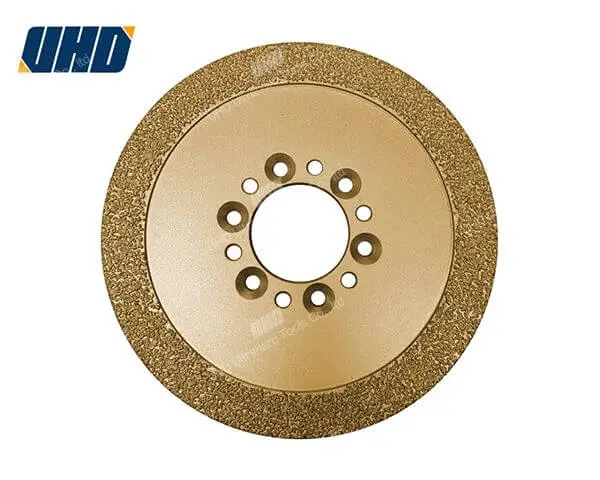
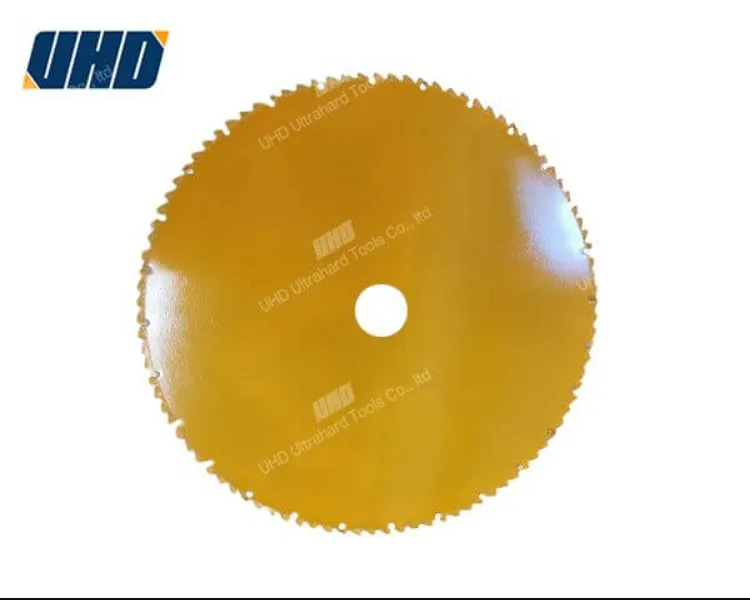
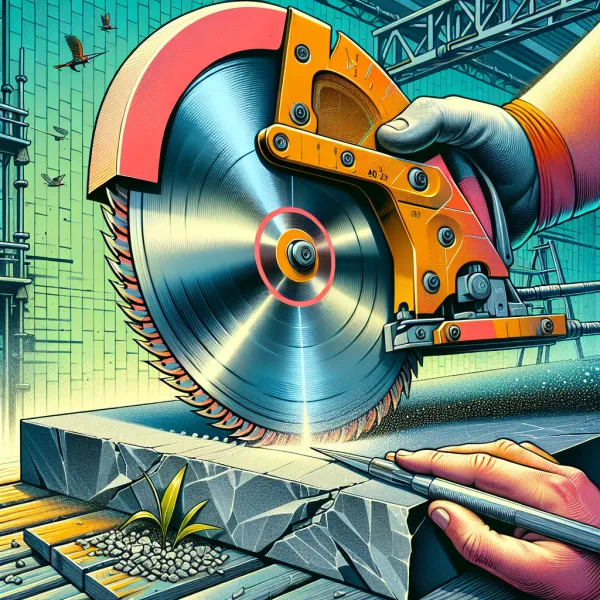
The manufacturing industry is increasingly challenged by airborne dust generated during cutting operations, which poses significant occupational health risks. As regulatory pressures rise alongside growing corporate responsibility commitments, advanced cutting technologies that reduce dust emissions have become essential. The ZS400H brazed diamond saw blade exemplifies this shift, utilizing precision chip-groove design, high-purity diamond particles, and a stable matrix structure to achieve remarkably low dust generation during cutting processes.
Excessive dust exposure in manufacturing environments not only threatens employee health by increasing risks of respiratory illnesses such as silicosis and chronic bronchitis, but also leads to decreased productivity and potential regulatory penalties. Studies indicate that dust particle concentrations can exceed safe levels by up to 250% in poorly managed cutting operations. Such figures underscore the demand for environmentally friendly and health-conscious cutting solutions.
At the heart of ZS400H’s performance is its precision-engineered chip grooves, strategically designed to accelerate the evacuation of cutting debris. Unlike conventional blade channels, these optimized grooves direct fragments efficiently away from contact zones, preventing buildup that is a primary source of airborne dust.
Empirical data from controlled trials reveal that chips are cleared at rates exceeding 30% faster compared to standard blade designs. This accelerated clearance reduces friction-induced heat, consequently minimizing the pulverization of material into fine dust particles.
ZS400H blades incorporate uniformly distributed, high-purity diamond grains embedded in a robust catalytic matrix. This design reduces ineffective abrasion zones, significantly lowering heat generation and thus suppressing dust production.
In laboratory evaluations, the low-friction surface interaction resulted in temperature reductions of up to 15°C during continuous dry cutting, contributing directly to decreased airborne particle generation.
Both dry and wet cutting methods are utilized in industry, each affecting dust generation differently. While wet cutting relies on water sprays to capture and settle dust, it poses challenges such as slurry disposal and equipment corrosion.
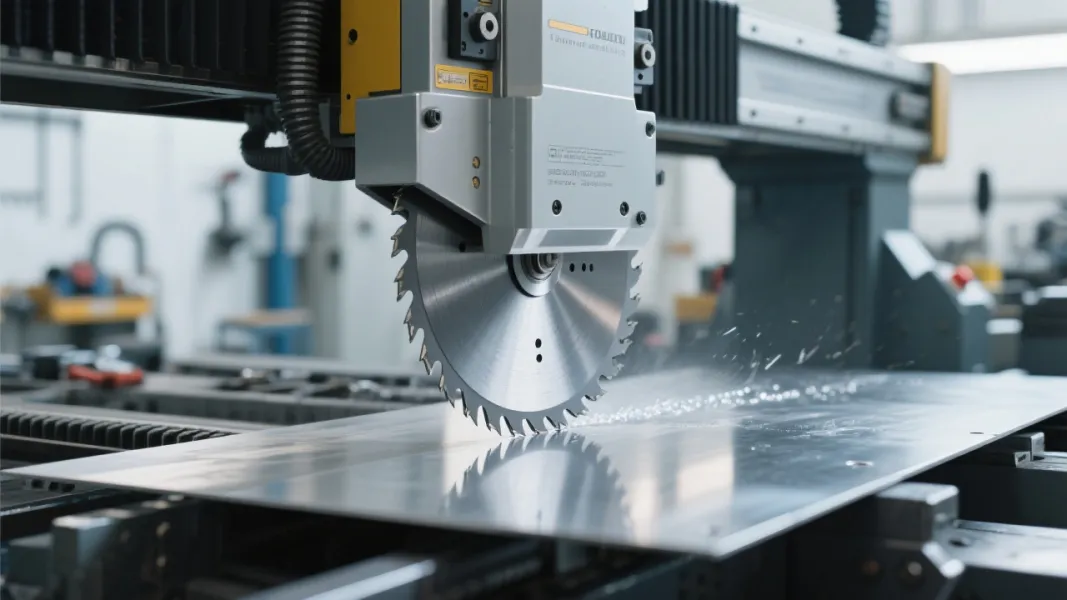
Studies show that ZS400H’s precision groove design coupled with dry cutting can reduce airborne dust by approximately 60%, narrowing the gap with wet cutting which typically yields dust reductions over 80%. This makes dry cutting with ZS400H a viable, environmentally friendlier option where water use is restricted or undesirable.
The integration of advanced cutting tools like the ZS400H diamond blade, combined with disciplined operational habits, forms the backbone of sustainable manufacturing. This holistic approach not only mitigates health risks but also aligns with environmental compliance and corporate sustainability goals.
 364
|
364
|
 Brazed diamond saw blade
Cutting equipment noise control
Vibration mitigation technology
Saw blade design optimization
Construction cutting efficiency
Brazed diamond saw blade
Cutting equipment noise control
Vibration mitigation technology
Saw blade design optimization
Construction cutting efficiency
 359
|
brazed diamond blade 400mm
concrete cutting tools
diamond blade performance comparison
wet vs dry cutting
construction blade selection
498
|
400mm concrete saw blade
brazed diamond blade application
concrete cutting depth
dry vs wet cutting
construction saw blade selection
428
|
wet cutting diamond blade lifespan
brazed diamond saw blade cooling
dry vs wet cutting methods
400mm diamond blade usage
stone cutting techniques
244
|
400mm diamond saw blade dry cutting
brazed diamond blade wet cutting comparison
diamond blade life optimization
stone cutting methods
construction saw blade selection
359
|
brazed diamond blade 400mm
concrete cutting tools
diamond blade performance comparison
wet vs dry cutting
construction blade selection
498
|
400mm concrete saw blade
brazed diamond blade application
concrete cutting depth
dry vs wet cutting
construction saw blade selection
428
|
wet cutting diamond blade lifespan
brazed diamond saw blade cooling
dry vs wet cutting methods
400mm diamond blade usage
stone cutting techniques
244
|
400mm diamond saw blade dry cutting
brazed diamond blade wet cutting comparison
diamond blade life optimization
stone cutting methods
construction saw blade selection









.png?x-oss-process=image/resize,h_600,m_lfit/format,webp)