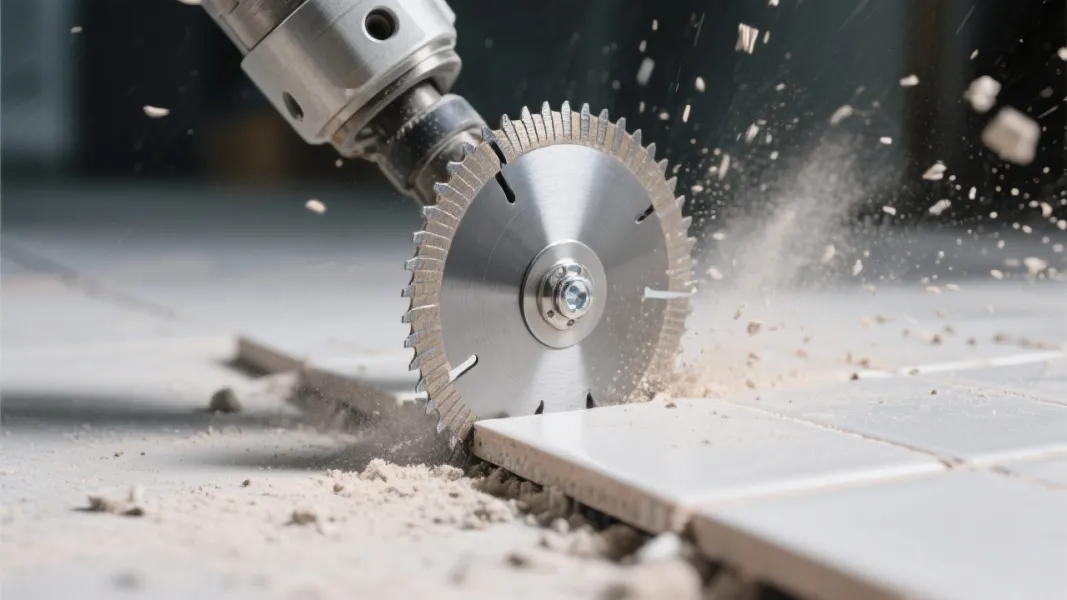
Manufacturers worldwide are under growing pressure to reduce environmental impact—and dust emissions from cutting operations are a major concern. The good news? Advanced diamond saw blades like the ZS400H brazed diamond blade aren’t just more efficient—they’re engineered to cut cleaner, safer, and smarter.
So how do premium saw blades minimize airborne particles? It starts with three key design elements:
“In our test facility in Germany, switching to ZS400H reduced PM2.5 levels in the workshop by 62% during dry cutting of granite—without sacrificing throughput.”
—— Maria Schmidt, Production Manager at EuroStone GmbH
Both methods have trade-offs—but the right blade makes all the difference:
| Cutting Method | Avg. Dust Emission (mg/min) | Best Use Case |
|---|---|---|
| Dry Cutting (with ZS400H) | ~35 mg/min | Outdoor sites, water-restricted areas, high-speed applications |
| Wet Cutting (standard blade) | ~70 mg/min | Indoor workshops, precision work where cooling is possible |
For export-focused factories aiming for ISO 14001 compliance or EU REACH standards, choosing a low-dust blade isn’t just smart—it’s mandatory.
To keep your saw performing at peak efficiency:
These small habits compound into big gains: improved worker safety, fewer health complaints, and better compliance scores.
Download our free technical guide: “How to Achieve Zero-Dust Workshops with Modern Diamond Blades” — packed with case studies, maintenance checklists, and ROI calculators.
Learn More About Efficient & Eco-Friendly Cutting Solutions
 189
|
189
|
 ZS400H brazed diamond saw blade
application guide
industrial manufacturing
cutting blades
high performance
durability
environmental friendliness
ZS400H brazed diamond saw blade
application guide
industrial manufacturing
cutting blades
high performance
durability
environmental friendliness
 484
|
brazed diamond saw blade
400mm saw blade
high-hardness material cutting
dry and wet cutting blade
construction cutting tools
484
|
brazed diamond saw blade
400mm saw blade
high-hardness material cutting
dry and wet cutting blade
construction cutting tools
 248
|
400mm brazed diamond blade
dry cutting vs wet cutting
municipal engineering blade cooling
diamond blade cooling techniques
cutting dust management
445
|
400mm diamond blade cutting methods
dry vs wet cutting comparison
brazed diamond blade applications
dust control in stone cutting
diamond blade cooling techniques
248
|
400mm brazed diamond blade
dry cutting vs wet cutting
municipal engineering blade cooling
diamond blade cooling techniques
cutting dust management
445
|
400mm diamond blade cutting methods
dry vs wet cutting comparison
brazed diamond blade applications
dust control in stone cutting
diamond blade cooling techniques
 385
|
400H braze welded diamond saw blade
high wear resistance saw blade
concrete cutting tool
granite and marble cutting blade
dry wet cut saw blade
385
|
400H braze welded diamond saw blade
high wear resistance saw blade
concrete cutting tool
granite and marble cutting blade
dry wet cut saw blade











.png?x-oss-process=image/resize,h_600,m_lfit/format,webp)