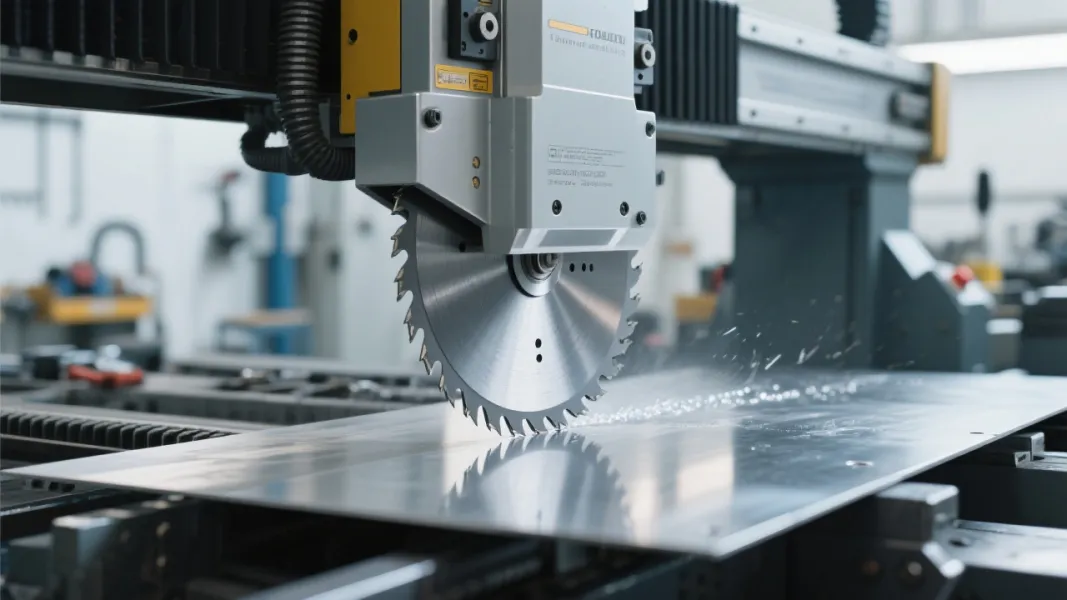
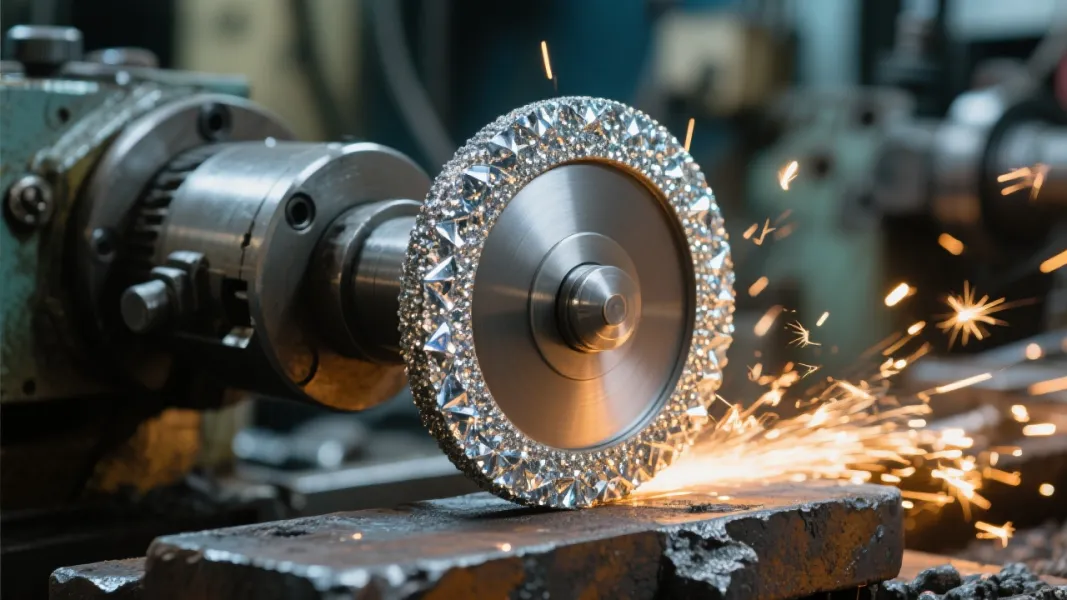
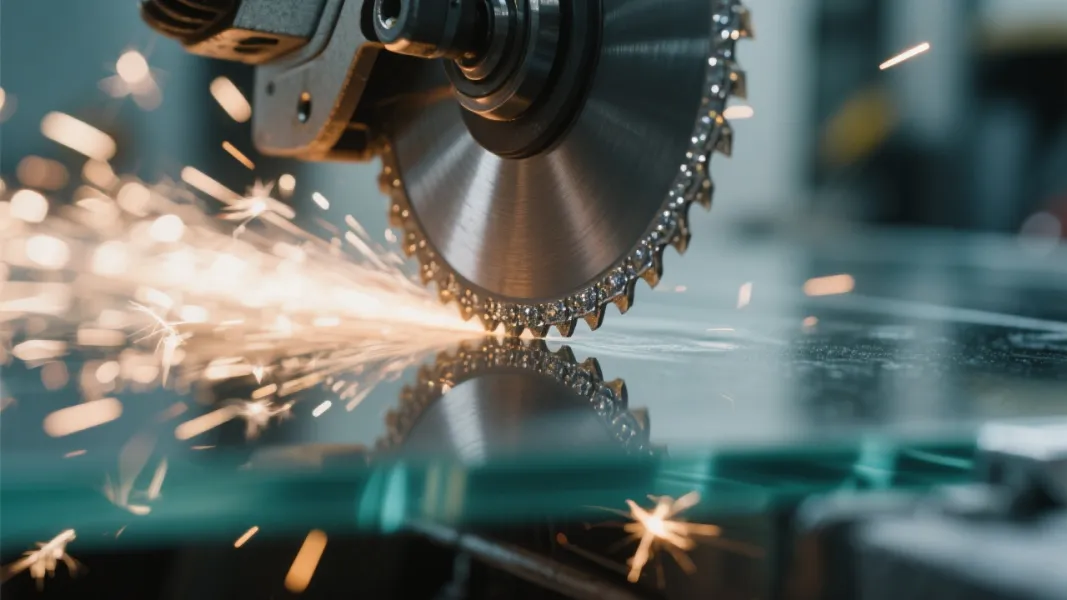
Noise and vibration are persistent challenges faced by construction teams deploying diamond saw blades in stone cutting and structural operations. These mechanical disturbances not only compromise worker comfort but also accelerate blade wear, reduce cutting accuracy, and impact equipment lifespan. Industry data indicates that excessive vibration can decrease blade lifetime by up to 30% while contributing to a 15% drop in cutting efficiency under field conditions.
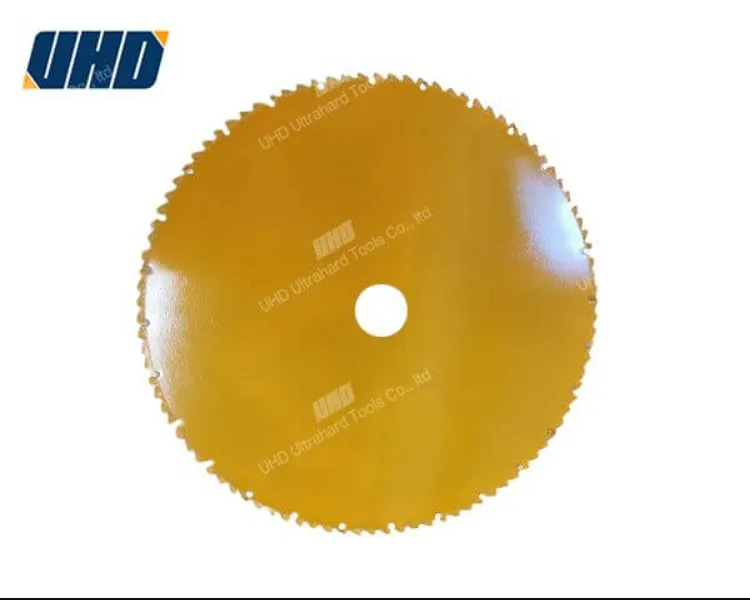
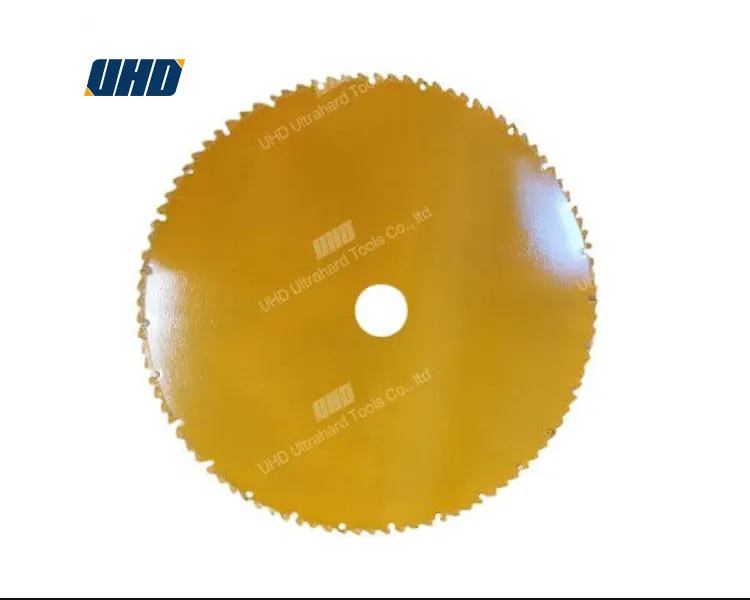
A key breakthrough in vibration reduction derives from the thoughtful arrangement of carbide-tipped diamond segments. For 400mm diameter blades, segment spacing and angular offset are engineered to shift the natural resonance frequencies away from the operational speed range (typically 2800–3200 RPM). By diversifying tooth pitch and increasing segment density by 20%, manufacturers achieve up to a 25% decrease in vibrational amplitude, as evidenced by recent field spectral analyses.
This nuanced design disrupts synchronous vibration modes, minimizing harmonic resonance that leads to loud noise peaks and unstable cutting feeds. Construction teams note reduced operator fatigue and improved precision when deploying blades with these optimized geometries.
“When switching to blades with staggered tooth angles, our vibration-related blade failures dropped significantly. You can feel the difference immediately on the machine handles.” – Site operator from New York-based contractor
The blade’s core, or substrate, must strike a delicate balance between structural rigidity for effective cutting force transmission and sufficient damping capacity to absorb mechanical shocks. High-alloy steel blends optimized for improved internal friction can reduce vibrational peaks by approximately 18%, according to material fatigue tests.
Engineers typically select cores with a Young’s modulus calibrated to sustain operational stresses without compromising impact absorption. This prevents the transfer of damaging oscillations to diamond segments, which can cause premature microfractures and loss of sharpness.
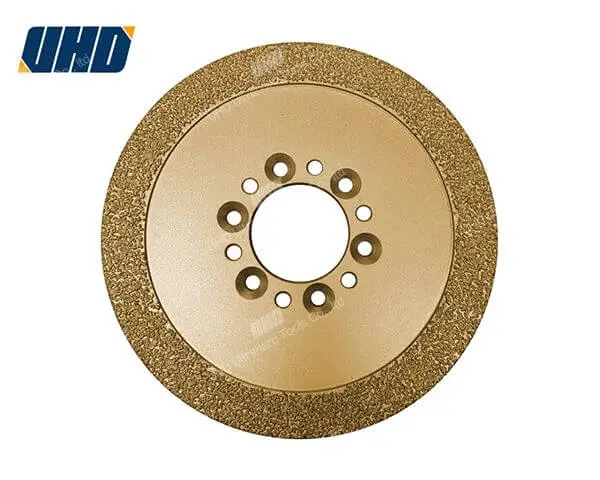
The brazing process affixing diamond particles to the alloy matrix demands tight thermal management. Excessive heat spikes induce residual stresses that translate into micro-cracks under load, undermining bond strength. State-of-the-art soldering methods employ staged temperature profiles and controlled cooling rates to minimize internal stresses by up to 35%, extending segment life.
A precise control of flux composition and brazing gap thickness ensures uniform metallurgical bonding, which directly correlates with vibrational stability during cutting. This dynamic synergy between diamond grit and metallic base minimizes particle shedding, reducing operational noise and stabilizing cut quality.
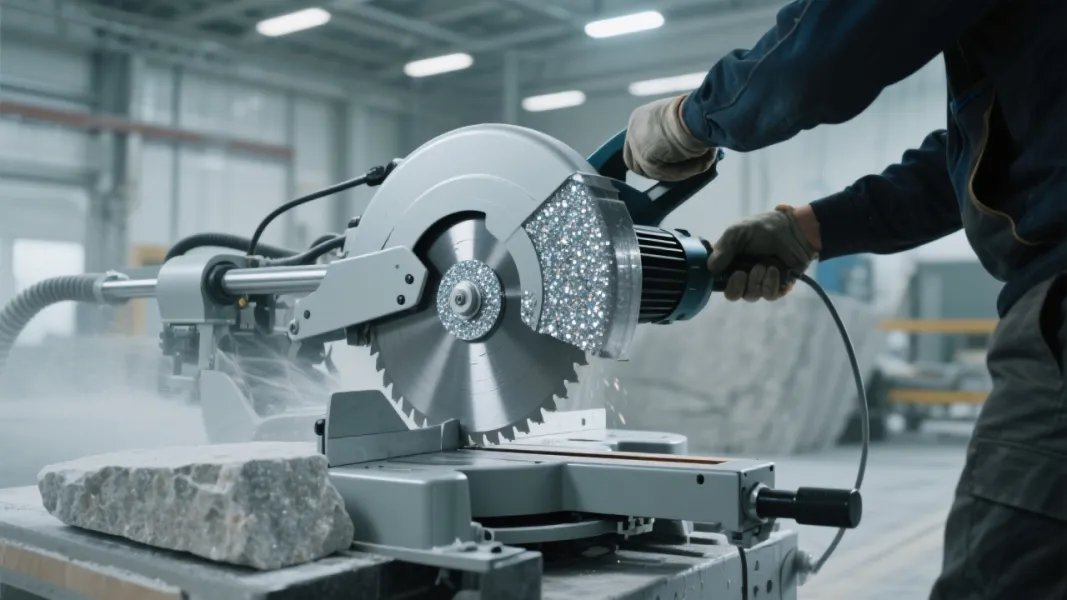
Field comparisons reveal that wet cutting typically halves vibrational intensity compared to dry cutting environments by lubricating contact surfaces and cooling the blade. Conversely, rough, imprecise feed rates amplify mechanical shocks, accelerating blade degradation.
Optimizing feed speed within 0.12–0.25 mm/rev, combined with maintaining blade RPM around 3000, results in balanced cutting force distribution. These parameters have demonstrated to improve saw blade service life by at least 30%, while improving worker safety and noise pollution metrics.
Experienced operators identify abnormal vibrations through tactile feedback and auditory cues. Sharp increases in vibration frequency or volume often signal blade misalignment or loosening clamps. Quick corrective actions like re-tightening fixtures and adjusting guard positioning can restore cutting stability in under five minutes on site.
Routine inspection using handheld vibration meters recommended by industry standards can quantify mechanical disturbances and inform preventive maintenance schedules.
Have you ever experienced unexplained blade vibrations disrupting your workflow? Understanding the underlying causes and corrective steps can dramatically improve your cutting operations.
 484
|
484
|
 Concrete cutting saw blade selection
400mm saw blade application scenarios
Cutter head wear identification
Optimal cooling methods for saw blades
Brazed diamond saw blades
Concrete cutting saw blade selection
400mm saw blade application scenarios
Cutter head wear identification
Optimal cooling methods for saw blades
Brazed diamond saw blades
 215
|
400H saw blade
wet and dry saw blade
diamond saw blade
stone cutting tool
construction tool
215
|
400H saw blade
wet and dry saw blade
diamond saw blade
stone cutting tool
construction tool
 380
|
UHD superhard materials cutting tools
high-precision metal processing cutting tools
customizable diamond cutting tools
380
|
UHD superhard materials cutting tools
high-precision metal processing cutting tools
customizable diamond cutting tools
 255
|
Concrete cutting saw blade selection
400mm brazed saw blade
Relationship between material hardness and cutting depth
Brazed diamond saw blade
Application of construction saw blades
403
|
stainless steel cutting efficiency
diamond saw blade selection
brazed diamond saw blades
cutting parameter optimization
diamond grit technology
255
|
Concrete cutting saw blade selection
400mm brazed saw blade
Relationship between material hardness and cutting depth
Brazed diamond saw blade
Application of construction saw blades
403
|
stainless steel cutting efficiency
diamond saw blade selection
brazed diamond saw blades
cutting parameter optimization
diamond grit technology