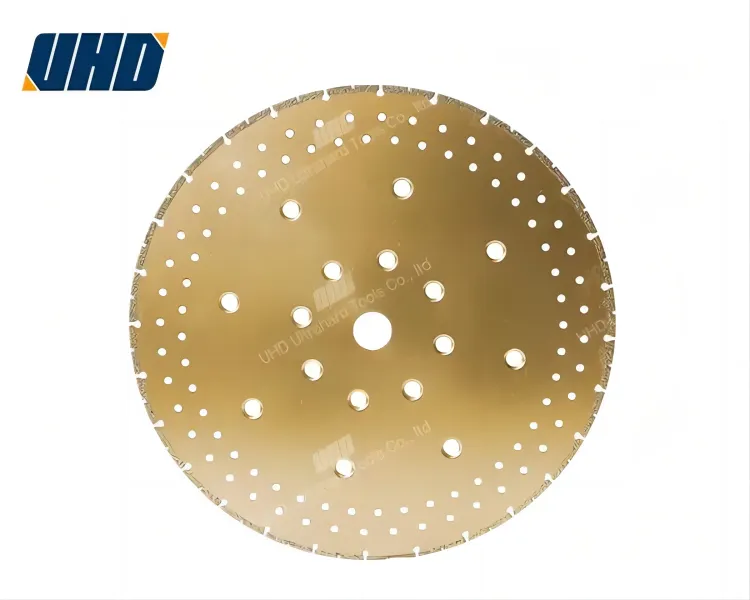
In metal and stone processing industries, millimeter-level deviations in saw blade dimensions can bring entire production lines to a halt. This in-depth analysis dissects the pivotal disparities between ISO and ANSI standards concerning dimensional tolerances of diamond saw blades — focusing on diameter, thickness, and run-out. These parameters critically influence installation compatibility, operational balance, and cutting accuracy across global manufacturing sites.
ISO standards, predominantly adopted in Europe and Asia, generally enforce stricter tolerance limits compared to ANSI standards favored in North America. For instance, ISO 3491:2020 mandates diameter deviations within ±0.05mm for blades under 400mm, whereas ANSI B7.1 allows up to ±0.1mm for similar dimensions. Thickness tolerances under ISO can be as tight as ±0.02mm, contrasting with ANSI’s ±0.05mm threshold.
| Parameter | ISO Standard (ISO 3491:2020) | ANSI Standard (B7.1) |
|---|---|---|
| Diameter Deviation | ±0.05 mm (for ≤400 mm blade) | ±0.10 mm (for ≤400 mm blade) |
| Thickness Tolerance | ±0.02 mm | ±0.05 mm |
| Run-Out (Concentricity) | Max 0.03 mm | Max 0.06 mm |
Even slight deviations in diameter affect the blade’s fitting on machine spindles, causing instability or misalignment. Thickness variations influence cutting precision and the stress distribution during operation, while excessive run-out leads to vibrations, increased wear, and blade failure risks like edge chipping or warping.
Employing calibrated micrometers and laser alignment instruments enhances inspection accuracy. The measurement procedure should include:
Overlooking crucial factors such as flange plate concentricity or ignoring spindle run-out can lead to eccentric blade rotation. This results in accelerated cutting edge wear, unsafe vibrations, and premature blade replacement — all inflating downtime and operational costs.
To ensure reliable equipment integration, use our ‘Blade Compatibility Self-Check PDF’ including:
These resources drastically cut troubleshooting time and optimize blade lifecycle when paired with UHD diamond saw blades — engineered using advanced vacuum brazing processes to ensure dimensional consistency beyond industry norms.

How do your teams manage dimensional tolerance challenges in international projects? Share your stories and questions in the comments below — let’s build a knowledge-centric community around precision cutting tool applications.
 92
|
92
|
 high-precision metalworking
diamond cutting tools
industrial cutting tools
superhard material tools
customized cutting tools
high-precision metalworking
diamond cutting tools
industrial cutting tools
superhard material tools
customized cutting tools
 94
|
diamond saw blade noise reduction
400mm vibration dampening blade
construction site cutting solutions
wet and dry cutting blades
stone processing tool optimization
94
|
diamond saw blade noise reduction
400mm vibration dampening blade
construction site cutting solutions
wet and dry cutting blades
stone processing tool optimization
 235
|
high-performance diamond blades
welded diamond saw blades
high manganese steel blades
cutting efficiency improvement
blade lifespan optimization
473
|
UHD super-hard material cutting tools
high-precision metal processing cutting tools
customizable diamond cutting tools
235
|
high-performance diamond blades
welded diamond saw blades
high manganese steel blades
cutting efficiency improvement
blade lifespan optimization
473
|
UHD super-hard material cutting tools
high-precision metal processing cutting tools
customizable diamond cutting tools
 395
|
stainless steel cutting efficiency
brazed diamond saw blade
diamond grit technology
cutting parameter optimization
blade edge maintenance
395
|
stainless steel cutting efficiency
brazed diamond saw blade
diamond grit technology
cutting parameter optimization
blade edge maintenance








.png?x-oss-process=image/resize,h_600,m_lfit/format,webp)