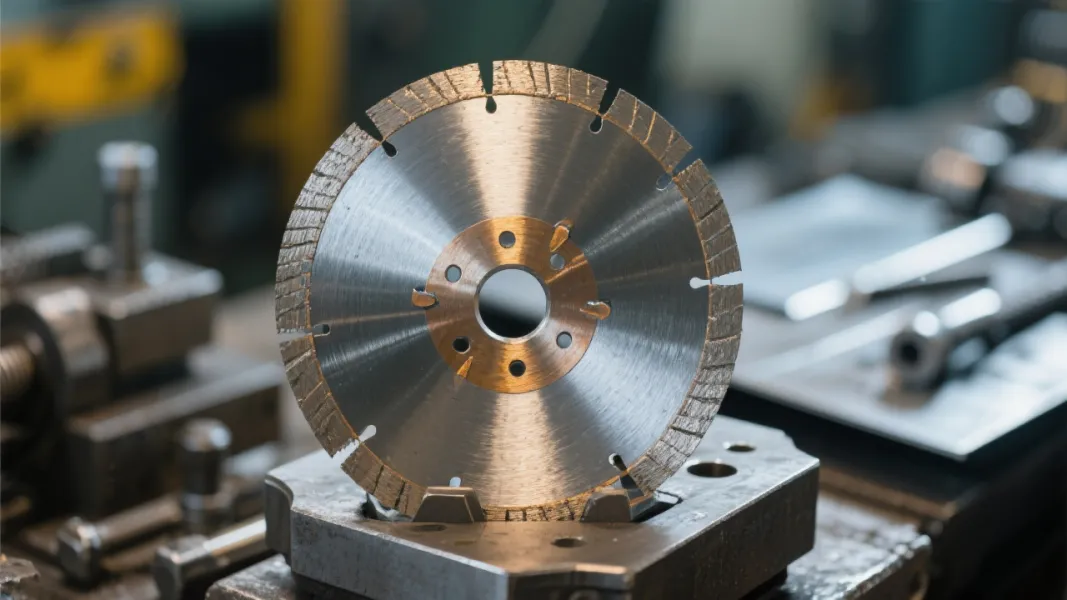
In industries relying on precision cutting—ranging from metal fabrication to stone processing—millimeter-level deviations in diamond saw blade dimensions can cause critical stoppages and compromised product quality. The global variance between ISO and ANSI standards regarding blade diameter, thickness, and runout tolerances significantly influences equipment compatibility and cutting performance.
This article deciphers key tolerance differences, demonstrates practical measurement techniques, and highlights common installation pitfalls. It aims to equip maintenance technicians and project engineers worldwide with actionable insights that ensure operational reliability and optimal cutting precision.
Even minimal deviations—such as a diameter tolerance of ±0.15 mm or a runout exceeding 0.05 mm—can result in vibration, edge chipping, or premature blade failure. For example, a European stone-cutting plant reported a 12-hour production halt traced to a 0.12 mm diameter deviation from ANSI standards, underscoring the need for rigorous compliance.
| Parameter | ISO Tolerance Range | ANSI Tolerance Range | Impact on Performance |
|---|---|---|---|
| Blade Diameter | ±0.10 to ±0.15 mm | ±0.15 to ±0.25 mm | Tighter ISO tolerances improve smooth rotation and reduce imbalance risk |
| Blade Thickness | ±0.02 to ±0.05 mm | ±0.05 to ±0.10 mm | Precision thickness controls cutting width and heat dissipation |
| Runout (Radial and Axial) | Max 0.03 mm | Max 0.05 mm | Critical to avoid blade vibration and blade edge chipping |
“Maintaining tighter dimensional tolerances per ISO standards has shown to reduce equipment downtime by up to 25% in multinational cutting operations.” — International Cutting Tool Manufacturers Association (ICTMA)
Accurate measurement is the first defense against mismatch issues. Technicians should use a calibrated micrometer to verify diameter and thickness to ±0.01 mm accuracy. For runout assessment, laser alignment devices or dial indicators are recommended.
The blade-to-arbor interface must also be inspected for concentricity. An interface misalignment as small as 0.02 mm can propagate to severe blade runout at cutting speeds exceeding 4000 RPM.
Common installation mistakes include incorrect flange face matching and uncalibrated spindle bearings causing radial runout. These inaccuracies can result in edge chipping (“blade chipping”) or eccentric vibration, leading to accelerated wear and unscheduled downtime.
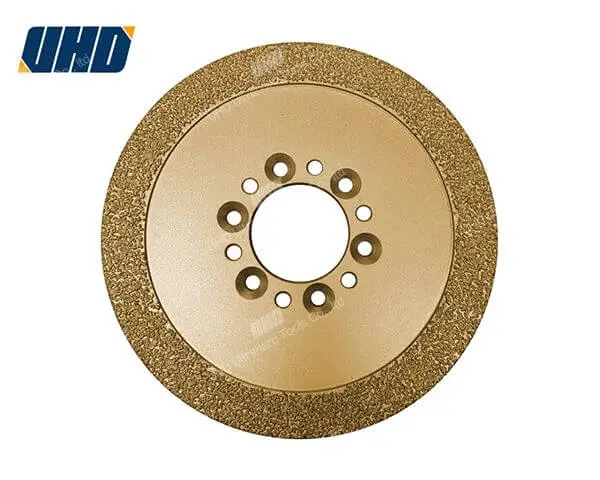
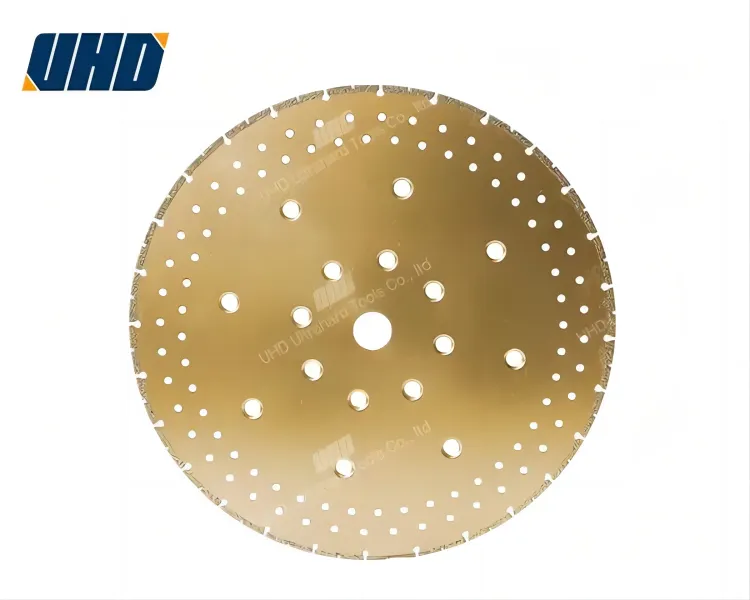
UHD’s diamond saw blades, manufactured using advanced vacuum brazing techniques, boast dimension consistency superior to industry averages. This drastically reduces fitment errors and improves lifetime cutting stability.
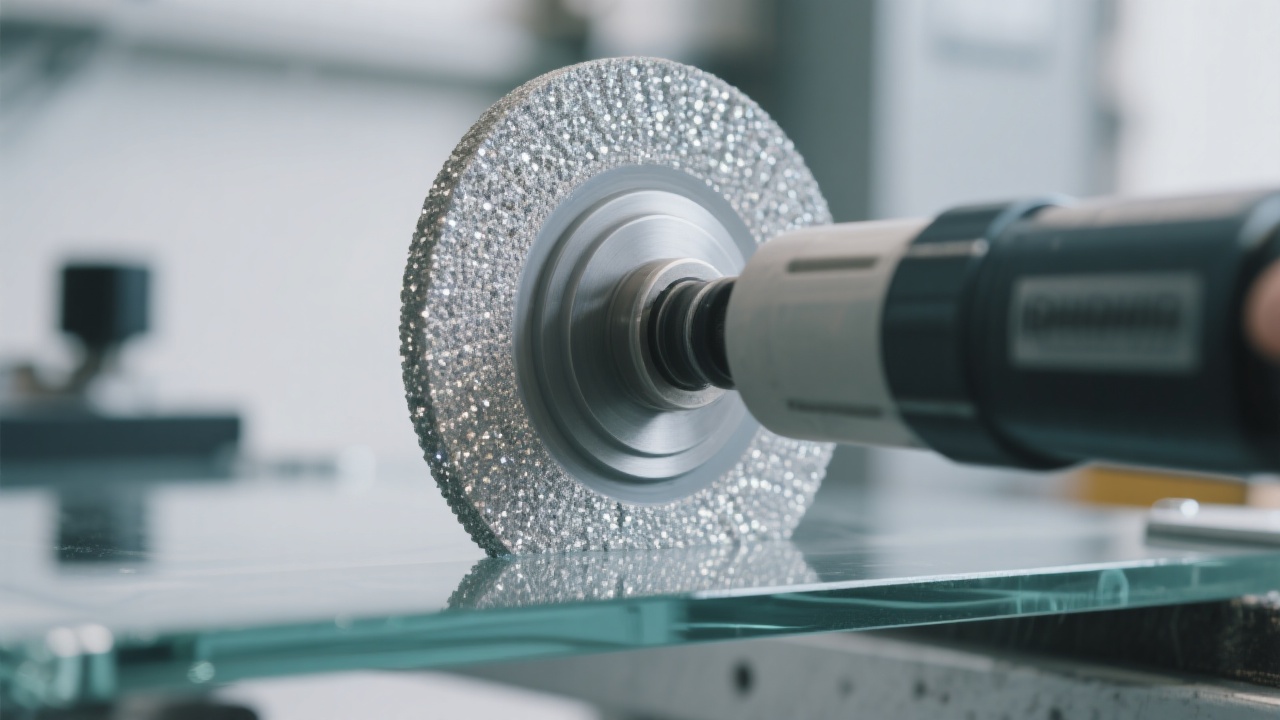
A quick visual inspection revealing uneven cutting edges or localized chip formations typically indicates excessive runout. Users should immediately confirm blade runout using dial indicators before continuing production. Early detection can prevent costly blade replacement and production delays.
Additionally, monitoring vibration sensor data on automated lines helps identify deviations beyond recommended 0.03 mm radial runout thresholds.
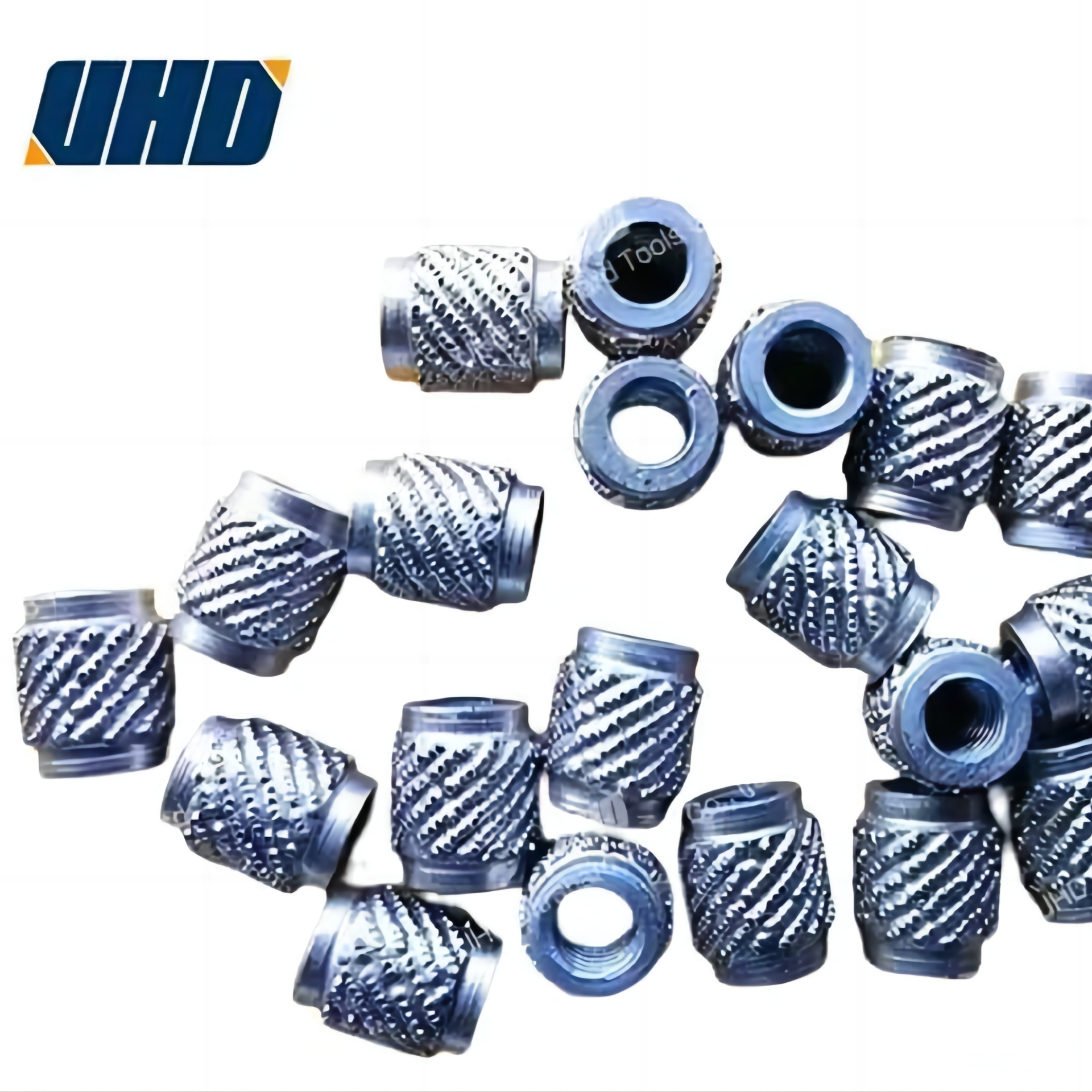
UHD’s adoption of precision vacuum brazing processes ensures diamond saw blade dimensions hold within ±0.1 mm diameter tolerance and runout below 0.02 mm, surpassing both ISO and ANSI benchmarks. This level of accuracy supports seamless interchangeability across international standards, safeguarding global project timelines.
To further assist engineers and technicians, UHD offers a downloadable “Compatibility Self-Check Checklist” in PDF format—an essential toolkit for onsite rapid verification and documentation.
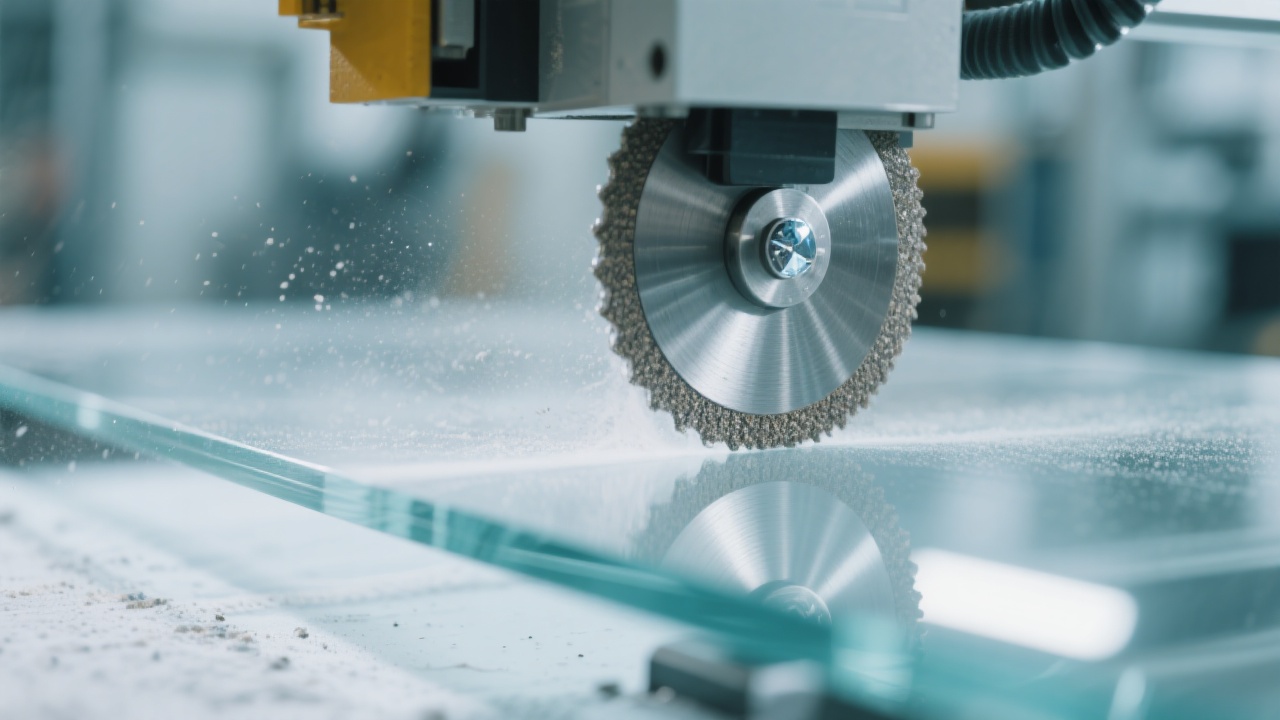

 459
|
459
|
 High-end saw blades
Low-dust cutting
Environmentally-friendly cutting technology
Diamond saw blades
Industrial green manufacturing
High-end saw blades
Low-dust cutting
Environmentally-friendly cutting technology
Diamond saw blades
Industrial green manufacturing
 235
|
high-performance diamond blades
welded diamond saw blades
high manganese steel blades
cutting efficiency improvement
blade lifespan optimization
235
|
high-performance diamond blades
welded diamond saw blades
high manganese steel blades
cutting efficiency improvement
blade lifespan optimization
 381
|
UHD superhard materials cutting tools
high-precision metal processing cutting tools
customizable diamond cutting tools
381
|
UHD superhard materials cutting tools
high-precision metal processing cutting tools
customizable diamond cutting tools
 388
|
high-performance diamond cutting blade
UHD diamond blade
metal cutting efficiency
stone cutting blade
extended blade life
388
|
high-performance diamond cutting blade
UHD diamond blade
metal cutting efficiency
stone cutting blade
extended blade life
 216
|
400mm concrete saw blade
concrete cutting blade selection
brazed diamond blade advantages
construction cutting tools
dry vs wet cutting
216
|
400mm concrete saw blade
concrete cutting blade selection
brazed diamond blade advantages
construction cutting tools
dry vs wet cutting