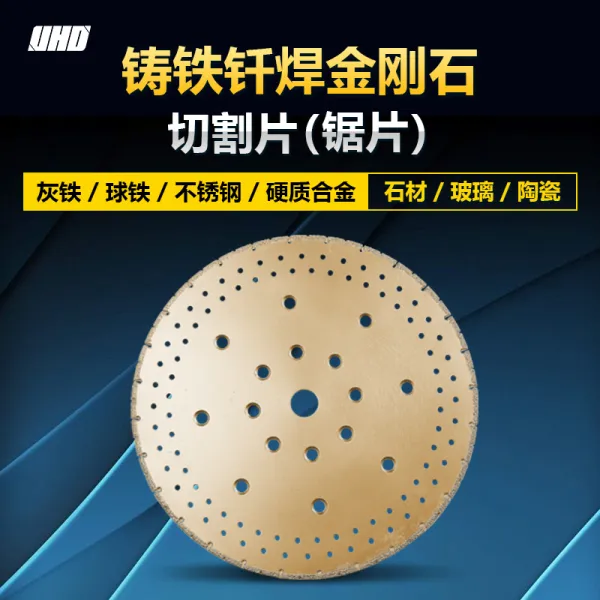
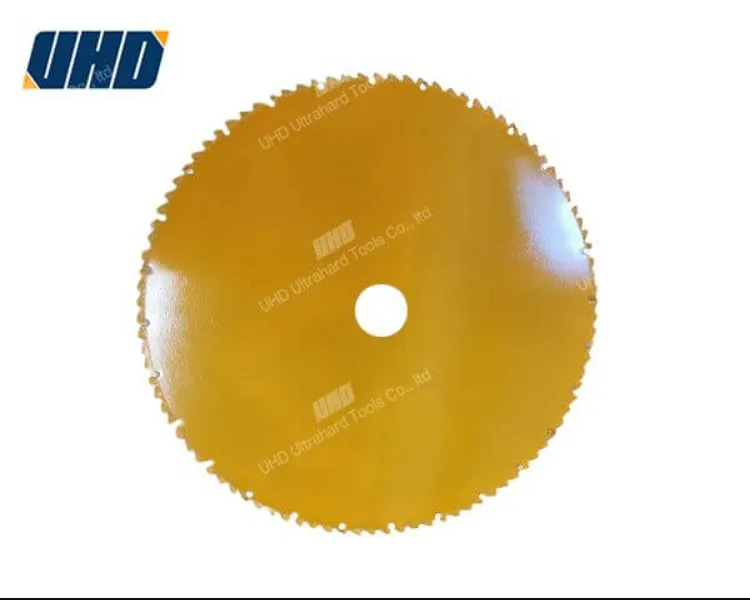
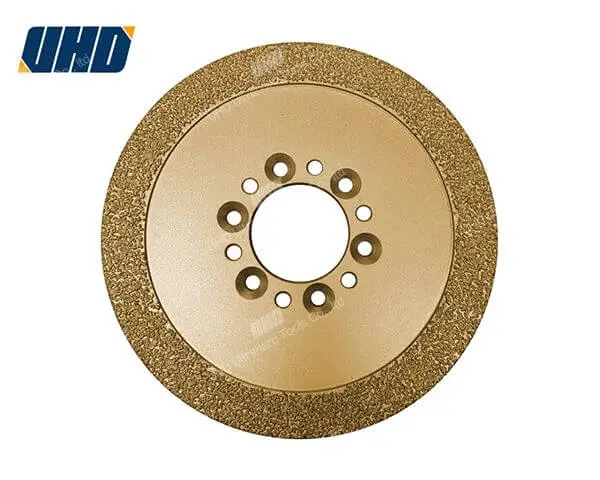
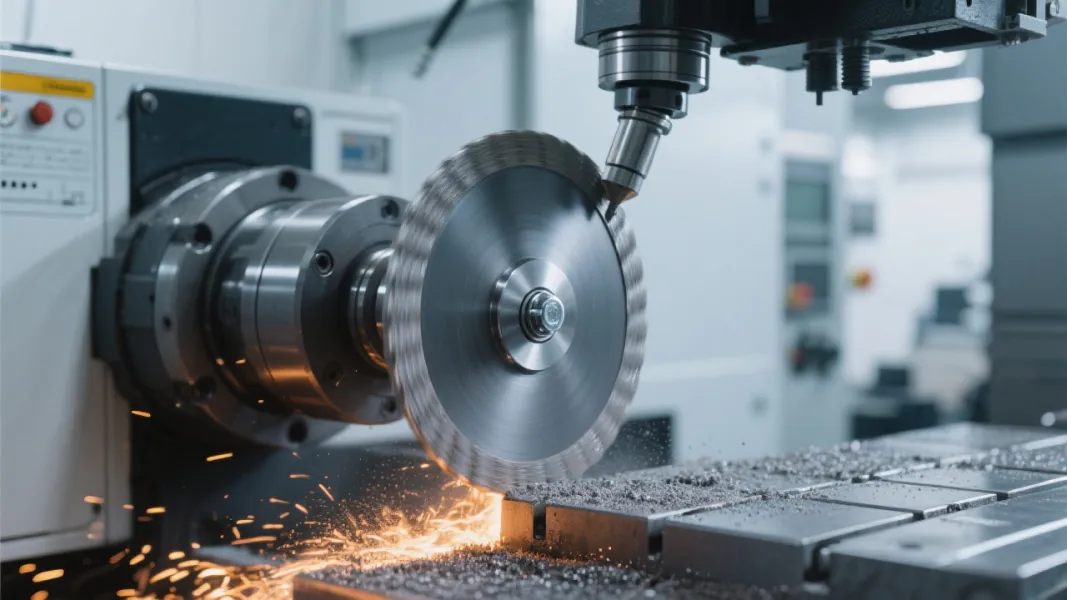
In the highly competitive manufacturing industry, companies are constantly seeking ways to improve cutting efficiency and reduce tool wear. This is especially true when dealing with high - hardness materials, where traditional cutting tools often fall short. Let's explore how a machinery factory overcame these challenges using the ZS400H brazed diamond saw blade, achieving a remarkable 25% monthly production efficiency increase.
The ZS400H saw blade features a unique design that combines high - wear - resistant diamond particles with a high - manganese steel base. This combination allows the saw blade to support continuous operation and meet the requirements of precision cutting. For instance, in a week - long continuous cutting test, the ZS400H showed only 5% wear, while traditional saw blades typically suffered 20 - 30% wear under the same conditions.
When dealing with various difficult - to - machine materials such as stainless steel, ductile iron, and cemented carbide, the correct cutting parameters are crucial. For stainless steel cutting, a linear speed of 30 - 40 m/min and a feed rate of 0.1 - 0.2 mm/r are recommended. For ductile iron, a linear speed can be increased to 40 - 50 m/min, and the feed rate should be adjusted to 0.2 - 0.3 mm/r. Here is a simple cutting parameter comparison chart:
| Material | Linear Speed (m/min) | Feed Rate (mm/r) |
|---|---|---|
| Stainless Steel | 30 - 40 | 0.1 - 0.2 |
| Ductile Iron | 40 - 50 | 0.2 - 0.3 |
| Cemented Carbide | 20 - 30 | 0.05 - 0.1 |
Proper installation and alignment of the saw blade are essential for extending its service life. Incorrect installation can lead to increased vibration, which not only affects the cutting quality but also shortens the saw blade's lifespan. In fact, studies have shown that improper installation can reduce a saw blade's life by up to 40%. By using vibration recognition technology, operators can detect abnormal vibrations early and take timely measures to avoid further damage.
A machinery factory was facing the problem of high saw blade replacement frequency. After switching to the ZS400H saw blade and optimizing its use and maintenance strategies, the factory achieved a 25% monthly production efficiency increase. The number of saw blade replacements decreased from 10 per month to only 3, resulting in significant cost savings.
Regular maintenance is crucial for ensuring the performance and longevity of the ZS400H saw blade. Rust prevention treatment should be carried out regularly, especially in a humid environment. A weekly inspection can help detect early signs of wear and damage. When the wear reaches 10% of the original diameter, it is recommended to replace the saw blade to avoid unexpected downtime and cost losses.
Q: How long can the ZS400H saw blade be used continuously?
A: Under normal operating conditions and proper maintenance, the ZS400H can be used continuously for about 200 - 300 hours.
Q: Can the ZS400H be used for cutting other materials not mentioned in the article?
A: It is possible, but it is recommended to conduct a small - scale test first and adjust the cutting parameters according to the actual situation.
Ready to revolutionize your cutting operations? Get the ZS400H Technical Manual Now
 380
|
380
|
 400mm brazed diamond saw blade
segment arrangement design
cutting noise reduction
vibration control technology
construction cutting skills
400mm brazed diamond saw blade
segment arrangement design
cutting noise reduction
vibration control technology
construction cutting skills
 364
|
Brazed diamond saw blade
Cutting equipment noise control
Vibration mitigation technology
Saw blade design optimization
Construction cutting efficiency
364
|
Brazed diamond saw blade
Cutting equipment noise control
Vibration mitigation technology
Saw blade design optimization
Construction cutting efficiency
 335
|
Welded diamond cutting blade
Stone cutting dust reduction
Burr - free cutting technology
Super - hard tool application
Cutting blade life improvement
335
|
Welded diamond cutting blade
Stone cutting dust reduction
Burr - free cutting technology
Super - hard tool application
Cutting blade life improvement
 304
|
400mm diamond saw blade
dry cutting techniques
wet cutting methods
brazed diamond blade advantages
stone cutting solutions
304
|
400mm diamond saw blade
dry cutting techniques
wet cutting methods
brazed diamond blade advantages
stone cutting solutions
 401
|
braze-welded diamond blade
400mm diamond saw blade
stone cutting tools
construction cutting tools
dry wet cutting blade
401
|
braze-welded diamond blade
400mm diamond saw blade
stone cutting tools
construction cutting tools
dry wet cutting blade