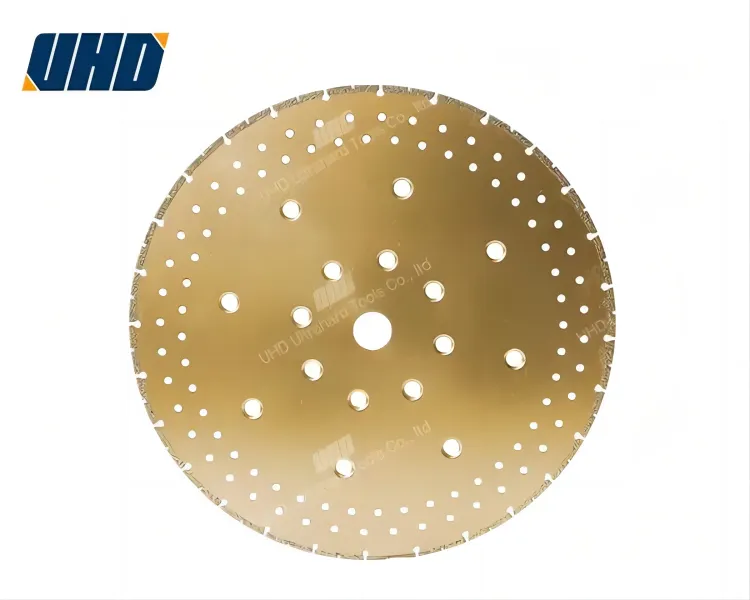
When it comes to choosing the right concrete cutting saw blade, you need to focus on three core dimensions: material hardness, cutting depth, and operating environment (dry or wet cutting). These factors will significantly influence the performance and efficiency of your saw blade.
| Dimension | Description |
|---|---|
| Material Hardness | Different materials, such as granite and concrete, have different hardness levels. You need a saw blade that can handle the specific hardness of the material you're cutting. |
| Cutting Depth | The required cutting depth determines the appropriate size and type of the saw blade. A deeper cut may require a larger and more robust blade. |
| Operating Environment | Whether you're doing dry or wet cutting can affect the blade's performance and lifespan. Some blades are better suited for dry cutting, while others work well in wet conditions. |
The 400mm diameter saw blade shows excellent performance when cutting high - hardness materials like granite and concrete. Its large size allows for greater cutting depth, and the design of the blade is optimized to handle the tough resistance of these materials. For example, in cutting granite, the 400mm saw blade can maintain a relatively stable cutting speed, with a cutting efficiency that is about 30% higher compared to smaller - sized blades.
In high - rise building demolition, the 400mm saw blade plays a crucial role. It can quickly and accurately cut through concrete structures, reducing the time and labor required for the demolition process. In floor treatment, it can precisely cut the floor surface, ensuring a smooth and even finish. In bridge maintenance, the blade can handle the high - hardness concrete and steel components, helping to extend the service life of the bridge.
The brazing technology used in the 400mm saw blade offers significant advantages over traditional welding. Brazed diamond saw blades are more durable because the brazing process provides a stronger bond between the diamond segments and the blade body. This results in a longer lifespan, with the blade lasting up to 50% longer than those using traditional welding methods. As an industry expert said, "Brazing technology has revolutionized the saw blade manufacturing industry, providing a more reliable and efficient solution for cutting hard materials."
To ensure the optimal performance of your saw blade, you need to know how to judge the wear of the blade head. When the blade head shows signs of excessive wear, such as uneven cutting or reduced cutting speed, it's time to replace the blade. Regarding the choice between dry and wet cutting, dry cutting is more convenient in some situations, but it may cause more dust. Wet cutting can reduce dust and cool the blade, but it requires a water supply system. In general, for long - term and continuous cutting, wet cutting is recommended as it can extend the blade's lifespan by about 20%.
Based on these characteristics, the 400H brazed diamond saw blade has become the preferred tool for many project managers. If you want to improve your cutting efficiency and reduce costs, click here to learn more about the 400H brazed diamond saw blade.