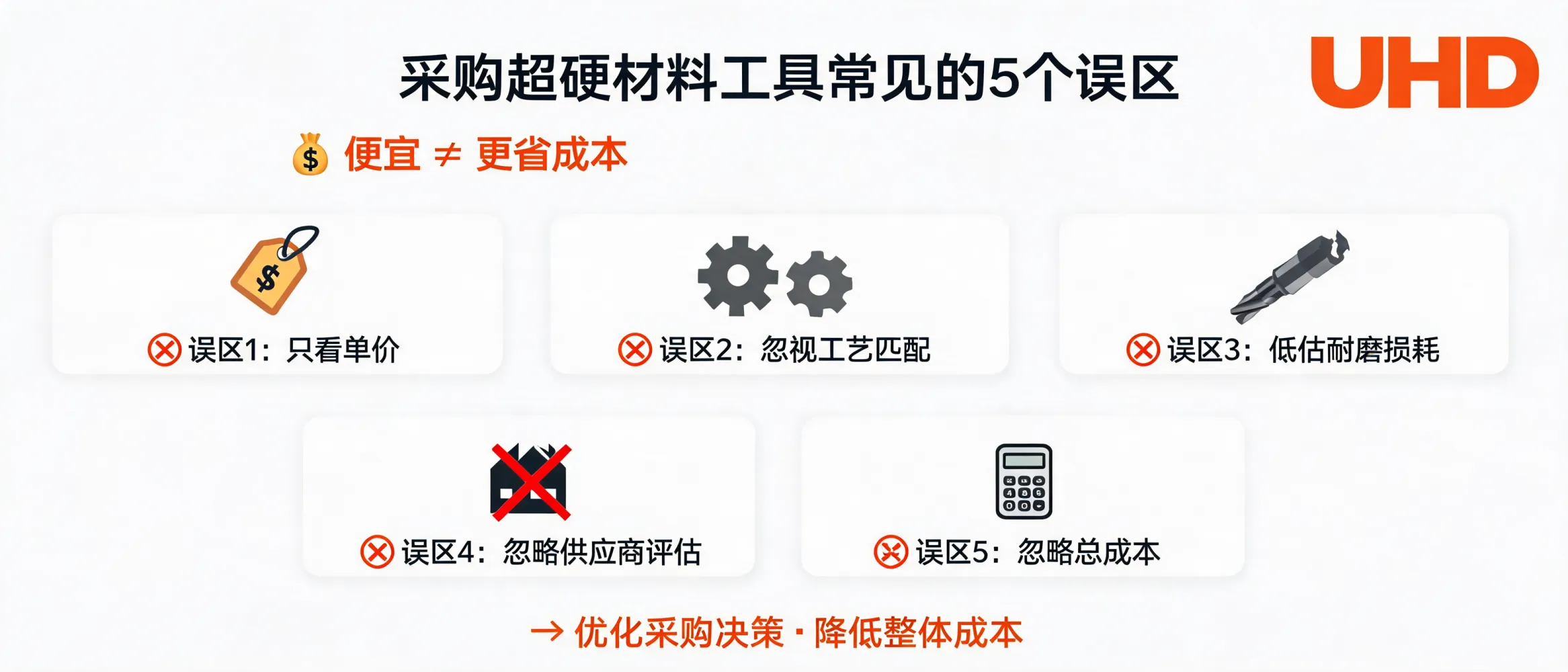
In industrial applications requiring ultrahard materials, procurement decisions play a crucial role in operational efficiency and cost management. UHD Ultrahard Tools Co., Ltd draws attention to five common misconceptions that can lead to suboptimal tool selection and higher long-term expenses. Avoiding these pitfalls ensures a smarter approach to purchasing high-performance tools designed for rigorous metal and stone processing environments.
A frequent mistake is basing procurement decisions only on the initial purchase cost. Ultrahard tools vary widely in durability and lifecycle costs, which directly impact overall production expenses. UHD emphasizes evaluating total cost of ownership, including tool longevity, maintenance frequency, and downtime.
Not all ultrahard materials are suited for every machining or cutting process. Selecting tools without considering process parameters—such as cutting speed, material hardness, and workpiece geometry—can result in premature wear or subpar finishing. UHD’s tailored solutions focus on matching tool characteristics to specific application requirements.
Tool wear directly affects production consistency and repeat costs. Failing to account for wear rates and maintenance efforts may inflate operational budgets. UHD ultra-hard material tools are engineered to optimize wear resistance, reducing unexpected replacements and supporting consistent workflow.
The expertise behind tool design, production, and after-sales service is critical. UHD’s collaborative research with leading universities and integrated service systems provide not just products, but comprehensive guidance to adapt tools efficiently for your industrial processes.
Different markets bear distinct standards and operational conditions. UHD maintains a global perspective informed by international trade platforms and regional industrial trends, ensuring that the tools comply with diverse customer demands and regulatory environments.
Choosing UHD Ultrahard Tools means partnering with a brand that prioritizes quality, innovation, and process alignment. By fully understanding these common misconceptions and focusing on comprehensive evaluation criteria, industrial clients can optimize procurement strategies, reduce hidden costs, and improve operational performance.
 147
|
147
|
 hard alloy cutting
brazed diamond blade
resin blade comparison
high manganese steel blade
industrial cutting solutions
hard alloy cutting
brazed diamond blade
resin blade comparison
high manganese steel blade
industrial cutting solutions
 408
|
UHD Ultrahard Tools
ultrahard material tools
standard definition
diamond tools
industrial applications
408
|
UHD Ultrahard Tools
ultrahard material tools
standard definition
diamond tools
industrial applications
 351
|
grey cast iron cutting tips
brazed diamond blade application
stainless steel machining challenges
diamond blade usage guide
industrial cutting efficiency improvement
351
|
grey cast iron cutting tips
brazed diamond blade application
stainless steel machining challenges
diamond blade usage guide
industrial cutting efficiency improvement
 498
|
UHD Ultrahard Tools
ultrahard material tools
diamond tools
carbide solutions
industrial applications
498
|
UHD Ultrahard Tools
ultrahard material tools
diamond tools
carbide solutions
industrial applications
 216
|
vacuum brazed diamond cutting abrasives
ultrahard material tools
process characteristics
application scenarios
UHD Ultrahard Tools
216
|
vacuum brazed diamond cutting abrasives
ultrahard material tools
process characteristics
application scenarios
UHD Ultrahard Tools