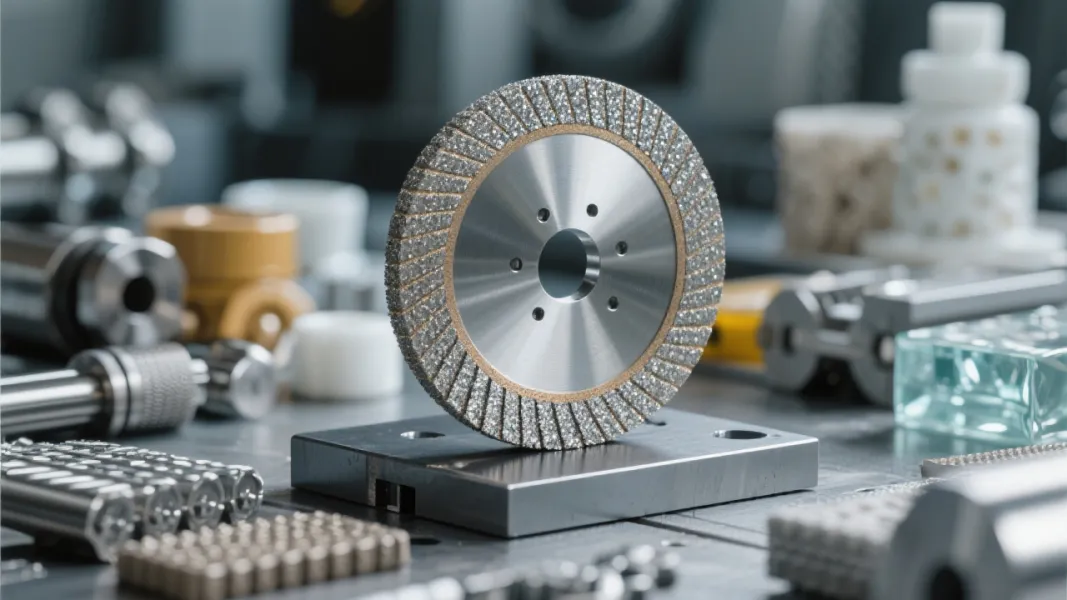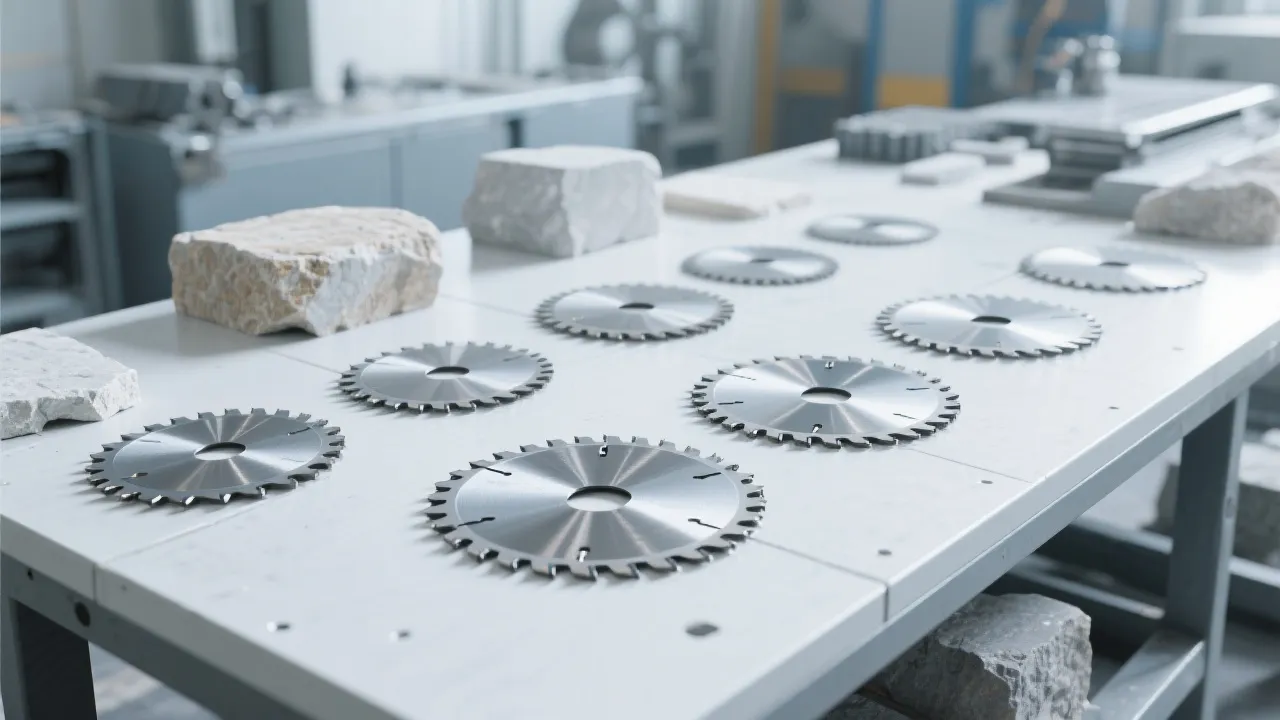
In demanding industrial sectors such as mold manufacturing and aerospace component machining, cutting hard alloys poses significant challenges. Traditional resin-bonded blades, although widely used, often suffer from frequent chipping and reduced service life when applied to these materials. The core issue lies in the inherent technical limitations of resin binders.
Resin bonding lacks sufficient abrasion resistance and heat stability, which directly influences the blade’s ability to withstand the intense shear stresses present during hard alloy cutting. This deficiency leads to rapid blade deformation and edge chipping, increasing downtime and replacing costs—a clear obstacle to efficient manufacturing workflows.
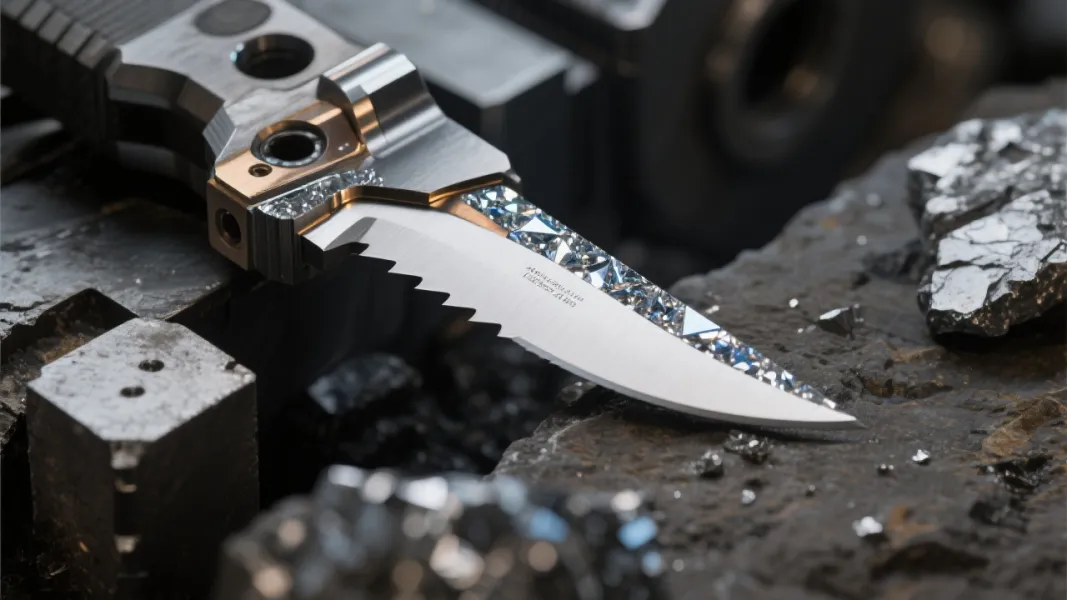
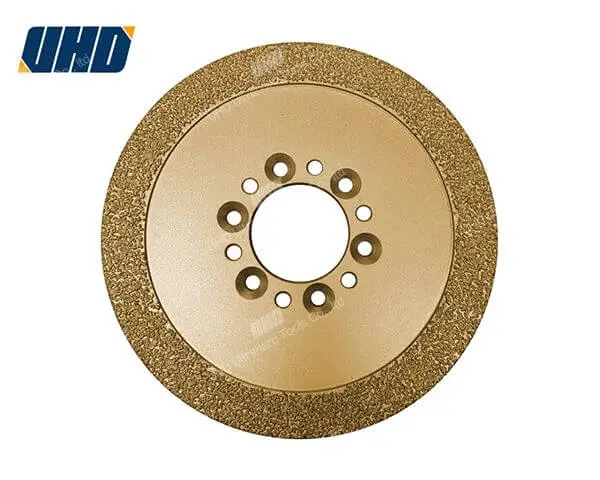
The UHD ZS400H sintered diamond blades address these challenges by integrating superior-grade diamond particles with a high-strength manganese steel substrate. The advanced high-temperature brazing process firmly anchors the diamond abrasives, enhancing durability and cutting precision.
Key technical highlights include:
Extensive industrial testing reveals compelling data that support a scientific decision-making approach for tool selection:
Note: Performance figures are derived from field tests conducted across mold tooling and aerospace manufacturing units.
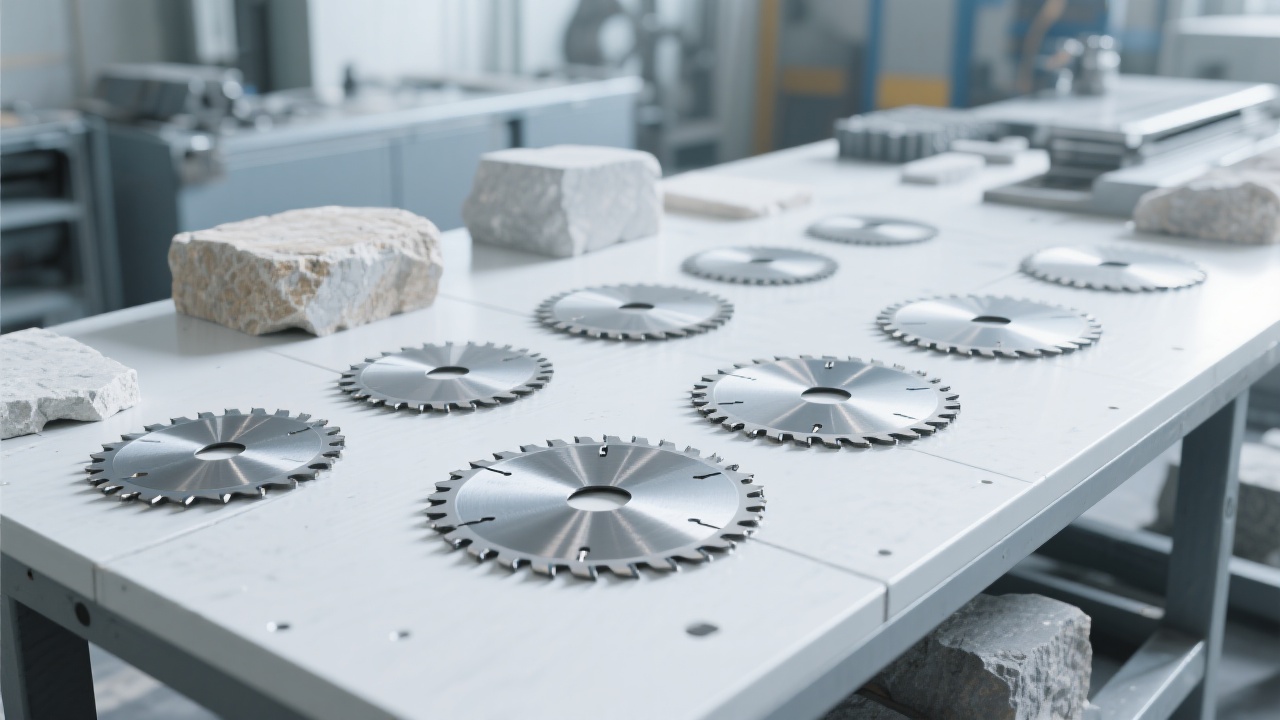
Users in mold manufacturing and aerospace parts machining report significant operational gains using ZS400H blades. The enhanced cutting stability reduces machine vibration and tooling defects, directly impacting product quality and throughput. Additionally, the lower environmental footprint aligns with increasingly stringent workplace safety regulations.
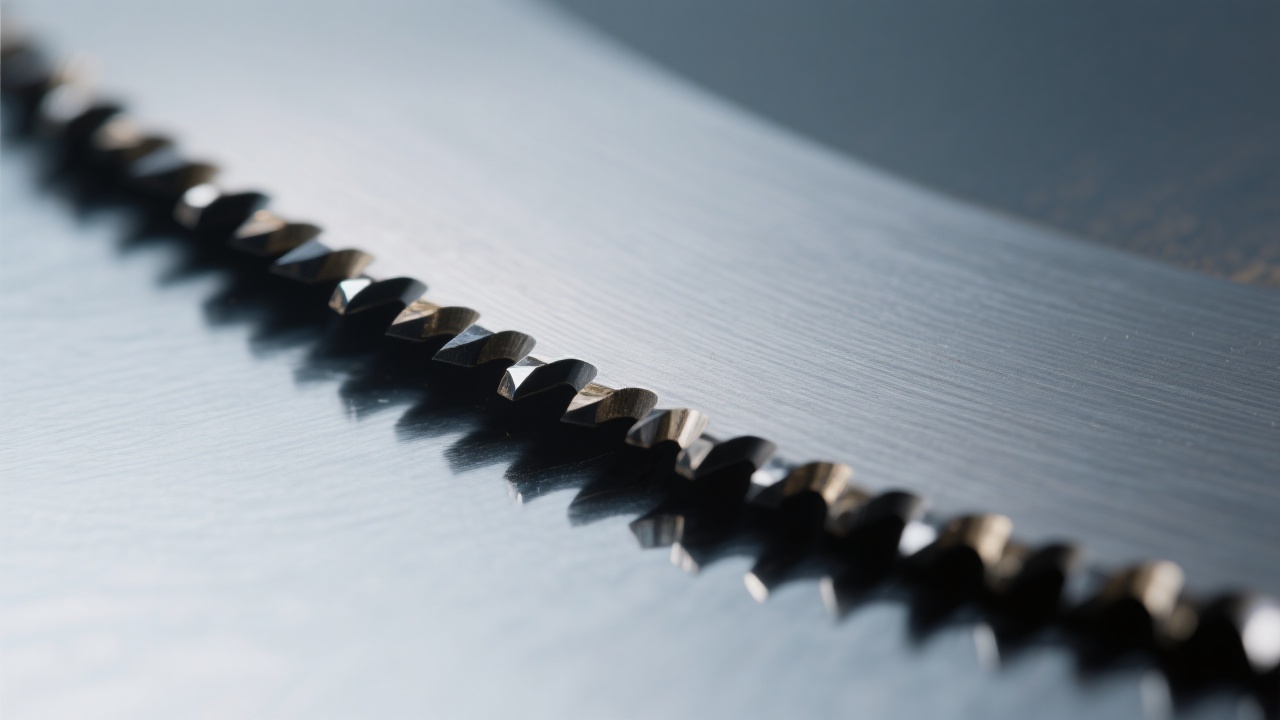
For manufacturing professionals evaluating cutting tool upgrades, the following guidelines facilitate rational choices to boost efficiency and reduce operating costs:
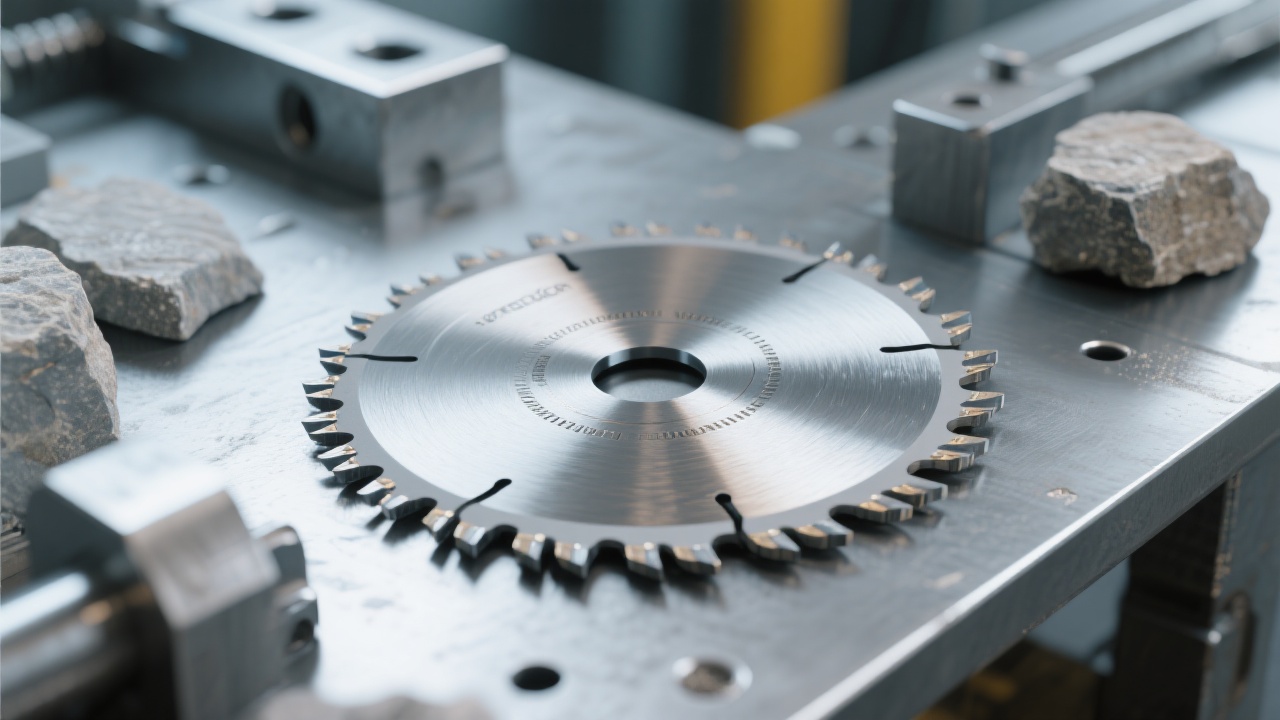

 61
|
61
|
 Low - dust cutting
Eco - friendly saw blade
ZS400H brazed diamond saw blade
Cooling method selection
Saw blade groove cleaning
Low - dust cutting
Eco - friendly saw blade
ZS400H brazed diamond saw blade
Cooling method selection
Saw blade groove cleaning
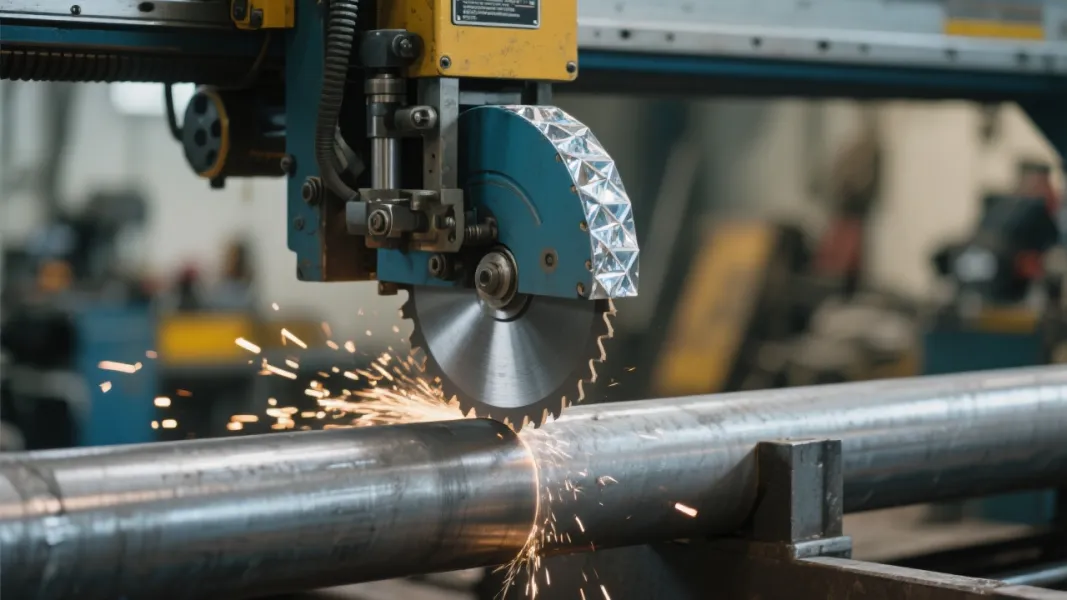 103
|
diamond blade tooth design optimization
workshop dust reduction PM2.5
welded diamond cutting disc
green manufacturing dust control
low-dust cutting tool design
103
|
diamond blade tooth design optimization
workshop dust reduction PM2.5
welded diamond cutting disc
green manufacturing dust control
low-dust cutting tool design
 341
|
stainless steel machining diamond tools
diamond cutting tool selection
vacuum brazed diamond abrasives
diamond tool failure analysis
high-precision metal machining
341
|
stainless steel machining diamond tools
diamond cutting tool selection
vacuum brazed diamond abrasives
diamond tool failure analysis
high-precision metal machining
 416
|
Diamond tool life
Downtime optimization
Rational cutting parameters
Tool management scheme
Manufacturing tool maintenance
395
|
stainless steel cutting efficiency
brazed diamond saw blade
diamond grit technology
cutting parameter optimization
blade edge maintenance
416
|
Diamond tool life
Downtime optimization
Rational cutting parameters
Tool management scheme
Manufacturing tool maintenance
395
|
stainless steel cutting efficiency
brazed diamond saw blade
diamond grit technology
cutting parameter optimization
blade edge maintenance
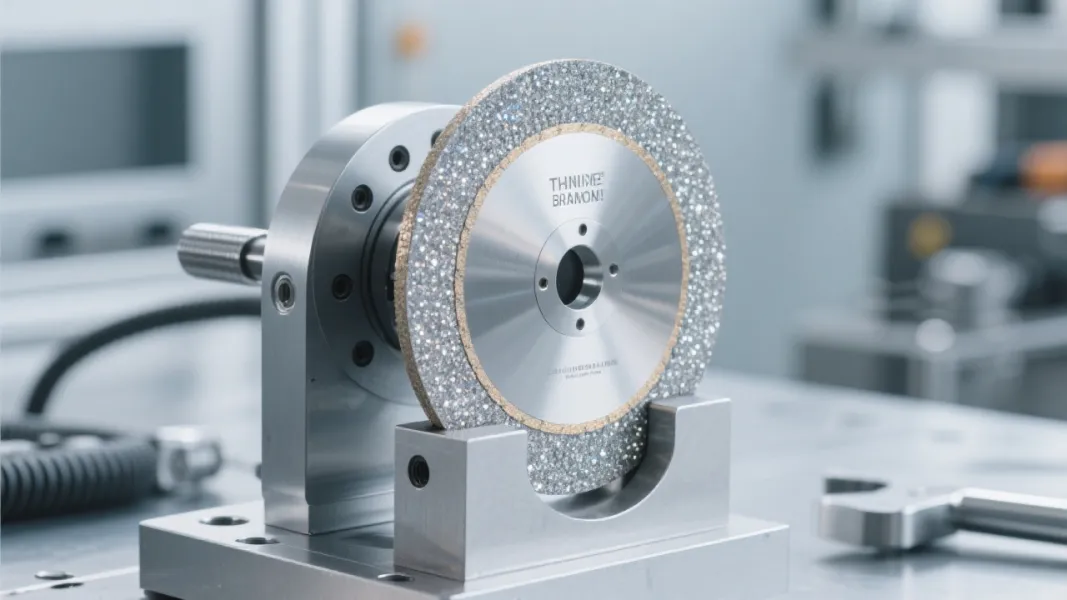






.png?x-oss-process=image/resize,h_600,m_lfit/format,webp)