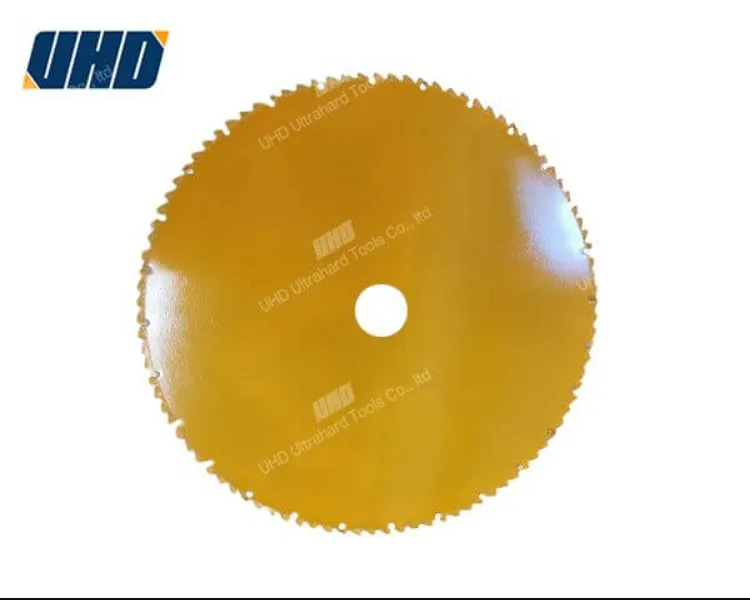
In construction and stone processing, vibration and noise from diamond saw blades are not just annoyances—they directly impact equipment lifespan, operator safety, and cutting precision. For professionals using 400mm brazed diamond saws, understanding how blade design balances rigidity and damping performance is critical.
When a 400mm saw blade spins at 3,000–5,000 RPM (typical in granite cutting), even minor imbalances can amplify into significant mechanical stress. Research shows that poorly designed bases increase vibration amplitude by up to 40% compared to optimized ones—leading to premature bearing wear, motor fatigue, and inconsistent cuts.
A study conducted across 12 construction sites in Germany and Turkey found that operators who switched to blades with optimized base material (high-strength alloy steel + internal damping layer) reported a 35% reduction in perceived noise and a 28% improvement in tool life after six months of use.
One mason in Dubai shared his experience: “I used to replace blades every two weeks because they’d vibrate so badly I couldn’t trust the cut. After switching to a blade with a dual-layer base, my team cut marble without stopping for re-alignment—even at 4,200 RPM.”
| Scenario | Recommended Base Material | Typical RPM Range | Vibration Reduction Goal |
|---|---|---|---|
| Granite Cutting (High Precision) | 45CrMo Steel + Internal Damping Layer | 3,500–4,500 | ≥30% |
| Concrete Demolition (Heavy Duty) | High-Strength Carbon Steel | 2,800–3,800 | ≥25% |
Operators should also check clamping stability regularly—loose fixtures can introduce secondary vibrations that mimic poor blade quality. A simple torque test with a calibrated wrench (set to 25–30 Nm) before each shift can catch issues early.
Explore our Industry Solutions Hub, where engineers share real-world case studies on optimizing cutting tools for global markets—from Middle Eastern quarries to European fabrication shops.
Access the Technical Resource Center






.png?x-oss-process=image/resize,h_600,m_lfit/format,webp)