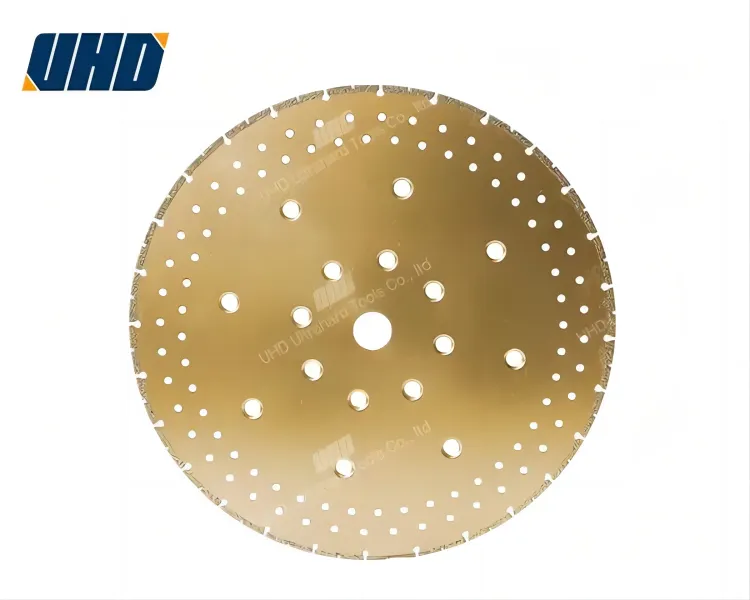
When municipal engineers face tight deadlines and limited access to water sources—common in arid regions or urban redevelopment zones—the choice between dry and wet cutting with a 400mm brazed diamond saw blade becomes critical. This isn’t just about convenience—it’s about performance, safety, and cost-efficiency.
In one case study from a construction site in Dubai, where daily water rationing was enforced due to regional scarcity, a team using traditional wet-cutting methods experienced a 35% drop in productivity during peak summer months. After switching to an optimized dry-cutting protocol for concrete pavement removal, they achieved:
| Parameter | Wet Cutting | Optimized Dry Cutting |
|---|---|---|
| Blade Life (hours) | 12–15 | 18–22 |
| Cutting Speed (m/min) | 0.8–1.0 | 1.2–1.5 |
| Dust Emission Level | Low (with water) | Moderate (with dust extraction) |
The key? Proper blade design, correct feed rate, and integrated dust control systems—not just brute force. Our R&D team found that when operators follow a structured decision flow (see below), dry cutting can be as reliable as wet cutting—even in high-demand environments like road resurfacing or bridge deck repair.
Before starting any cut, ask yourself these three questions:
If the answer to #1 is “no,” proceed to optimized dry cutting. If #2 indicates harder materials (>C40), use a segmented blade with enhanced cooling channels. For #3, always pair dry cutting with HEPA-grade dust extraction units—this reduces airborne particulates by up to 70%, per ISO 13849 standards.
This approach isn't theoretical—it's been tested on over 40 projects across Middle East, Southeast Asia, and North America. In each case, the result was faster completion times, fewer tool replacements, and higher compliance with environmental regulations.
That’s why leading contractors now treat dry cutting not as a compromise—but as a strategic advantage when done right.
Ready to optimize your next project? Whether you're managing a city-wide infrastructure upgrade or a small-scale renovation, our engineered 400mm brazed diamond blades are designed for real-world conditions—not just lab tests.
Explore Our Dry-Cut Ready Blades →