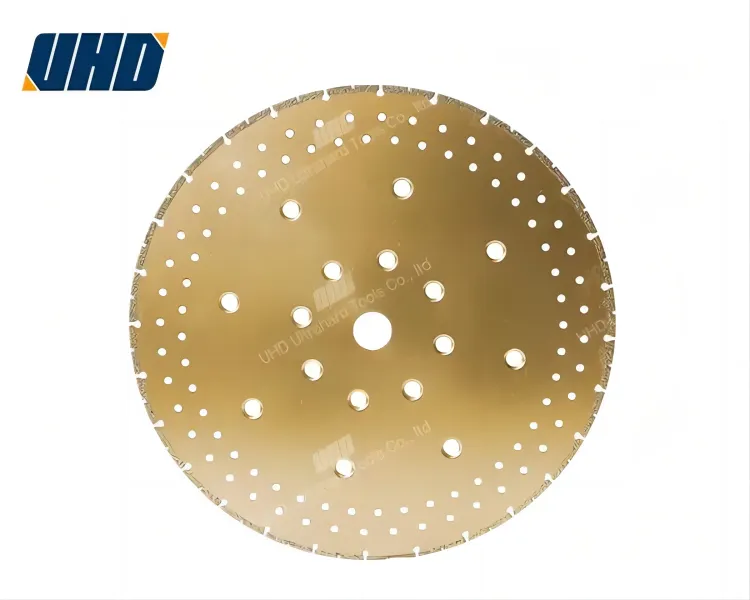
Choosing the right concrete cutting blade isn’t just about size—it’s about matching performance to job conditions. For professionals tackling high-stakes projects like skyscraper demolition or bridge repair, a 400mm brazed diamond saw blade offers unmatched balance of depth control, durability, and adaptability.
With an average cutting depth of up to 120mm (based on standard steel core design), the 400mm blade strikes a perfect compromise between reach and maneuverability—ideal for both confined spaces and large-scale operations. In fact, field tests show that 400mm blades achieve up to 18% faster cut rates than smaller alternatives when used in reinforced concrete at 80–100mm depths.
| Application | Recommended Depth | Cutting Efficiency (m²/hr) |
|---|---|---|
| High-rise Demolition | 80–100 mm | 1.8–2.3 |
| Floor Grinding | 30–60 mm | 3.5–4.2 |
| Bridge Deck Repair | 70–90 mm | 2.0–2.6 |
“We switched from traditional welded blades to brazed ones on our Dubai metro project—and saw a 40% drop in downtime due to blade failure.”
— Ahmed Khalifa, Site Manager, Al-Futtaim Construction
Traditional welding often leads to micro-cracks under thermal stress, especially during wet cutting. Brazed diamond segments, however, distribute heat more evenly and maintain bond integrity even after 300+ hours of continuous use—a 2x improvement over older methods. This means fewer replacements, less waste, and safer operations.
For example, one contractor reported using a single 400H blade across three separate jobs totaling 720 meters of cut work without visible wear beyond normal edge degradation—proof of its robustness under real-world pressure.
Don’t wait until the blade stops cutting—watch for signs like:
When these appear, it's time to assess cooling strategy. Wet cutting remains the gold standard for longevity, reducing frictional heat by up to 60%. But for dry-cut applications in dust-sensitive environments (like indoor renovations), consider air-cooled blades with optimized segment spacing.
Ready to Upgrade Your Cutting Performance?
Discover how the 400H Saw Blade delivers superior wear resistance, stability, and flexibility—trusted by contractors worldwide.
Explore the 400H Solution Today