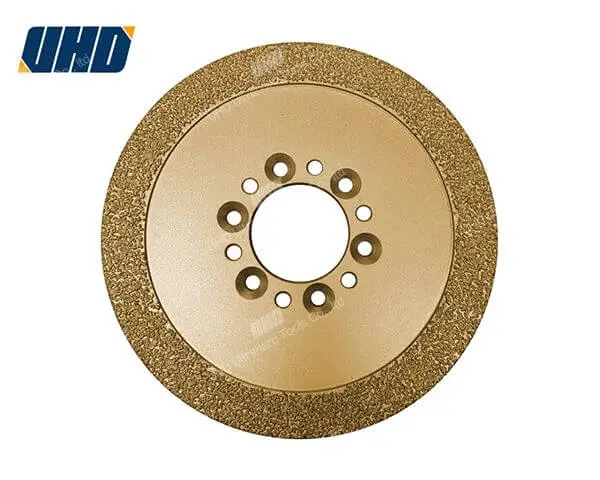
When you're working on high-stakes construction tasks—from demolishing concrete floors in skyscrapers to repairing bridge supports—your tools must perform reliably under pressure. A 400mm concrete cutting blade isn’t just a piece of equipment; it’s a decision point that impacts safety, speed, and cost-efficiency.
Before selecting any blade, ask yourself three questions:
For example, if your project involves cutting through 80mm thick reinforced concrete, a standard blade may overheat within minutes. That’s where advanced braze-welded diamond blades come in—they maintain sharpness longer and reduce vibration by up to 40%, making them ideal for precision work like floor leveling or edge trimming.
| Application | Key Benefit | Efficiency Gain |
|---|---|---|
| High-rise demolition | Stable cutting at high RPMs (up to 3,500 RPM) | +25% faster than traditional blades |
| Floor grinding & leveling | Low-vibration design prevents surface damage | Reduces rework by ~15% |
| Bridge repair | High wear resistance in harsh environments | Lasts 2x longer than conventional blades |
The difference between brazing and traditional welding is not just technical—it’s operational. In brazing, the diamond segments are bonded using a metal alloy (typically copper-tin) at lower temperatures (~700°C), which preserves the integrity of the diamonds. This results in:
In contrast, traditional welding often causes micro-cracks in the diamond layer due to thermal stress, leading to premature failure. For contractors who value uptime and worker safety, this makes all the difference.
To ensure optimal performance:
If you’ve ever struggled with inconsistent cuts or unexpected downtime, consider switching to a premium 400mm braze-welded blade. These aren’t just tools—they’re part of your team’s productivity strategy.
Got questions about blade selection or application-specific advice? Drop a comment below—we’ll help you choose the right one based on your job specs.
Get Your Customized Blade Recommendation Now