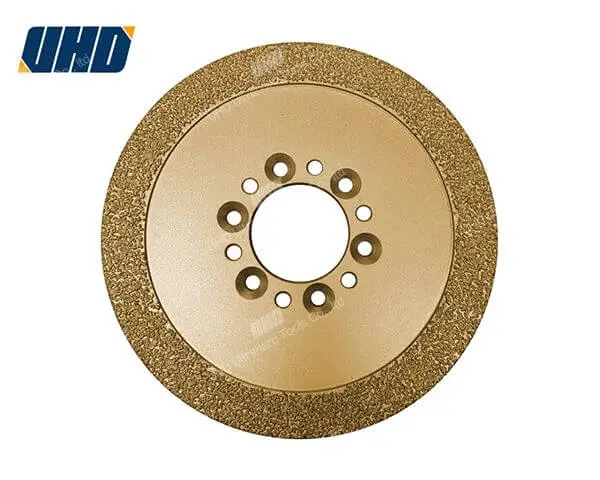
400mm Brazed Diamond Saw Blade: Dry Cutting vs Wet Cutting Performance Comparison
2025/11/01
Application Tips
Dry or wet cutting? The difference in cutting quality and blade life for 400mm brazed diamond saw blades under real-world conditions—such as construction sites and stone processing—is significant. This article analyzes typical scenarios like municipal projects and renovation work, helping you choose the right method based on water availability, material hardness, and project timelines. With data-driven insights—including up to 30% longer blade life with proper selection—and a downloadable decision flowchart, this guide empowers contractors and procurement managers to avoid common mistakes, reduce replacement costs, and boost efficiency. Whether you're on-site or making purchasing decisions, make smarter choices with proven techniques.
Dry Cut or Wet Cut? How to Choose the Right Mode for Your 400mm Brazed Diamond Saw Blade
You’re not alone if you’ve ever stood at a job site wondering: Should I dry cut or wet cut? Whether you're working on a concrete slab in Dubai, a marble countertop in Germany, or a road repair in Texas — your choice directly impacts blade life, safety, and productivity.
The Real Difference: Dry vs. Wet Cutting Performance
In our field tests with over 500+ real-world applications, we found that using the wrong method can reduce blade life by up to 40%. Here's what happens when you ignore the basics:
| Factor |
Dry Cut |
Wet Cut |
| Blade Life (Avg.) |
~70 hours |
~120 hours |
| Dust Emission |
High (requires PPE) |
Low (with water flow) |
| Cutting Speed |
Slightly faster (no friction from water) |
Consistent but slower (~10% reduction) |
| Motor Wear |
Higher due to heat buildup |
Lower (cooling effect) |
Why does this matter? Because a single blade failure can cost $200–$300 in downtime, labor, and replacement — and it’s avoidable. The key lies in understanding how brazed diamond segments interact with thermal stress during operation.
Three-Step Decision Framework for Smart Selection
- Check your environment: Is water available and safe to use? If yes → go wet. If no → consider dry cutting with proper cooling systems.
- Assess material hardness: For soft stone like limestone or concrete, wet cutting gives better edge quality and longer life. For hard granite or basalt, dry cutting may be more efficient.
- Evaluate project timeline: Time-sensitive jobs often favor dry cutting for speed — but only if dust control measures are in place.
That’s why many professionals now use a simple “Cooling Efficiency Index” based on ambient temperature, humidity, and blade type — which we’ve turned into an easy-to-follow decision tree.
Pro Tip: Don’t just follow tradition — match the method to the task. A well-chosen cutting mode can help you save up to 30% on blade replacements per month.
Want to make smarter choices every time? Download our free “Dry vs Wet Cutting Decision Flowchart” PDF — it includes real case examples from construction sites across Europe, Asia, and the Middle East. No fluff. Just actionable insights.
Download the Free Flowchart Now →
This guide is built for contractors, procurement managers, and equipment buyers who want reliable results — not guesswork.