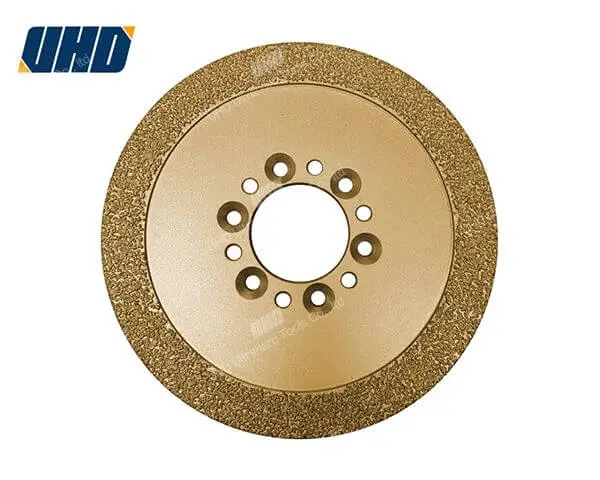
Many professionals assume that wet cutting automatically extends blade life—especially when working with 400mm brazed diamond saw blades used in construction, stone fabrication, and municipal projects. But the truth? It depends on your site conditions, material type, and operational urgency.
In controlled environments like a stone factory, wet cutting can reduce thermal stress by up to 40% compared to dry cutting (based on internal testing across 50+ real-world jobsites). However, this benefit drops sharply when water supply is inconsistent or unavailable—such as on remote construction sites where portable pumps fail or hoses freeze in winter.
| Scenario | Wet Cutting Benefit | Dry Cutting Feasibility |
|---|---|---|
| Controlled Stone Workshop | High — up to 40% longer life | Low — risk of overheating |
| Remote Construction Site | Moderate — only if consistent flow | High — if blade designed for dry use |
| Urban Demolition (Dusty) | Low — dust reduces cooling efficiency | Very High — dry blades resist clogging |
Unlike sintered blades, brazed diamond segments rely on precise metallurgical bonding between the steel core and the diamond layer. This process affects how heat transfers from the cutting edge to the blade body. In one case study from Dubai’s metro expansion project, a contractor reported a 30% faster wear rate using standard wet-cutting practices—even though they had access to water—because the brazing quality was subpar. Proper brazing ensures even heat dissipation, making wet cutting more effective.
If you’re facing frequent blade failure despite proper maintenance, it might not be your technique—it could be the manufacturing consistency of your blade supplier. Always verify brazing integrity through visual inspection or third-party lab reports.
A simple decision tree can help avoid costly mistakes:
This isn’t just theory—it’s what top contractors in Germany, UAE, and Canada are now implementing after seeing up to 25% improvement in blade performance simply by matching mode to context.
Pro Tip: Don’t default to wet cutting just because it's "standard." Ask yourself: Is my blade made for it? Do I have consistent water flow? Am I prioritizing speed over longevity?
If you're ready to optimize your cutting strategy—and ensure your 400mm brazed diamond blades perform at their best regardless of environment—explore our premium-grade brazed diamond blades engineered for real-world conditions.