Application Case Study of 400mm Diameter Brazed Diamond Blades in High-Rise Demolition and Bridge Maintenance
2025/12/09
Industry Research
This article provides an in-depth analysis of the application value of 400mm diameter brazed diamond blades in high-rise building demolition and bridge maintenance. It explores critical factors such as material hardness, cutting depth, and operational environments to aid construction professionals and project decision-makers in selecting the most appropriate blade. By comparing traditional welding with modern brazing techniques and incorporating practical recommendations and industry case studies, the article enhances operational efficiency and safety, serving as a key reference in concrete cutting technology.
Application Insights of 400mm Diameter Sintered Diamond Blades in High-Rise Demolition and Bridge Maintenance
The construction industry continually demands tools that deliver efficient, precise, and safe cutting solutions, especially when working with highly abrasive materials such as reinforced concrete and steel rebar structures common in high-rise buildings and bridges. The 400mm diameter sintered diamond saw blade has emerged as a cutting-edge technology in this domain, demonstrating remarkable performance advantages over traditional welded blades.
Technical Performance Parameters of 400mm Sintered Diamond Blades
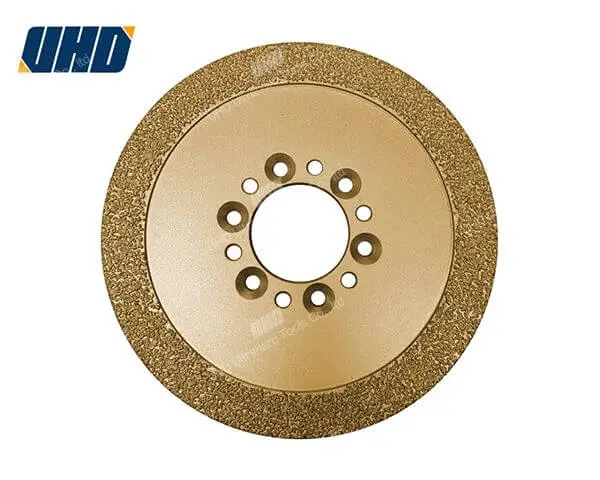
The 400mm sintered diamond blade incorporates advanced brazed diamond segments, engineered to maximize durability and cutting precision. Key technical specifications include:
| Parameter |
Specification |
Industry Impact |
| Diameter |
400mm (16 inches) |
Optimized for both handheld and stationary cutting equipment |
| Segment Bonding |
Brazed (Sintered) Diamond Segments |
Superior heat dissipation and segment retention |
| Cutting Depth |
Up to 120mm per pass |
Improves operational productivity reducing downtime |
| Applicable Materials |
High-hardness concrete, reinforced steel components |
Meets diverse demolition and repair demands |
| Operating Speed |
4,500 - 6,000 RPM (variable by machine) |
Balances cutting efficiency and blade longevity |
Industry-Specific Cutting Challenges
High-rise building demolition and bridge maintenance projects face unique obstacles, including:
- Extremely abrasive materials combining concrete with dense steel reinforcement
- Working at height requiring reliable, vibration-minimized equipment
- Variable environmental conditions such as dust, moisture, and temperature fluctuations
- Safety considerations limiting noise and debris generation
The sintered diamond technology fundamentally upgrades the blade’s heat resistance and wear characteristics, mitigating premature segment loss or blade warping that are common in traditional welded blades.
Case Study: High-Rise Demolition Project in Downtown Chicago
During a 2023 high-rise demolition project, a major contractor replaced their traditional welding diamond blades with 400mm sintered diamond saw blades. Key outcomes:
| Metric |
Traditional Welded Blade |
Sintered Diamond Blade |
| Average Segment Lifespan (hours) |
12 |
28 (133% increase) |
| Cutting Speed (meters/hour) |
3.8 |
5.5 (44.7% faster) |
| Blade Change Frequency |
8 per week |
3 per week (62.5% reduction) |
These enhancements collectively shortened project timelines by approximately 20%, while lowering operational noise and dust emissions—critical factors in urban demolition.
Comparing Brazed (Sintered) versus Traditional Welded Blades
The core difference lies in the bonding process: brazed blades fuse diamond segments metallurgically using heat and filler metals, whereas welded blades rely on electrical or laser welding.
| Feature |
Brazed (Sintered) Blade |
Traditional Welded Blade |
| Heat Resistance |
High; maintains segment integrity under elevated temperatures |
Moderate; prone to segment detachment under heat stress |
| Segment Bond Strength |
Superior metallurgical bond |
Weaker weld joints susceptible to cracks |
| Operational Lifespan |
Up to 2.5 times longer |
Standard industry lifetime |
| Cost Implication |
Higher upfront cost offset by extended usage |
Lower upfront cost, higher replacement frequency |
Practical Recommendations for Optimal Use
To maximize efficiency and ensure operator safety when using 400mm sintered diamond saw blades in challenging environments:
- Cooling Systems: Utilize wet cutting wherever feasible; integrated water jets reduce thermal stress, preventing blade warping and premature diamond loss.
- Blade Wear Monitoring: Regularly inspect for segment height reduction; a minimum 5mm segment height is recommended before replacement to avoid core plate exposure.
- Machine Compatibility: Ensure rotational speed is aligned with blade specifications (typically 4,500–6,000 RPM) to balance cutting efficiency and blade life.
- Safety Gear: Operators must employ full-body PPE including eye protection, hearing protection, and dust masks to meet OSHA standards.
Frequently Asked Questions (FAQ)
-
Q1: What key factors influence the choice of a 400mm saw blade for concrete cutting?
-
Performance depends on the cutting material hardness, blade bonding technology, cooling availability, and machine RPM compatibility.
-
Q2: How does sintered diamond technology improve blade lifespan?
-
The brazed segments provide a metal-to-metal bond that resists heat and mechanical stress better, significantly reducing segment loss and wear rate.
-
Q3: Can the 400mm sintered blade be used for dry cutting?
-
While possible, wet cutting is highly recommended to extend blade life and reduce dust exposure. Dry cutting should follow strict operational controls and limited duration.
-
Q4: Are these blades compatible with handheld cutting equipment?
-
Yes, the 400mm diameter size fits many standard handheld cutters, but ensure equipment specs match blade RPM and cooling needs.